Personality Disorders Explained: A Beginner's Guide

Personality disorders are long-term patterns of thinking, feeling, and behaving that cause distress or problems in relationships, work, or daily life. A diagnosis requires an assessment by a qualified mental health professional, not a score on an online quiz.
What is a personality disorder?
A personality disorder affects the way a person understands themselves, responds to emotions, and relates to other people. The pattern usually begins by adolescence or early adulthood and appears across more than one setting. A difficult trait becomes a disorder when it is persistent, inflexible, and linked to substantial impairment or distress.
What are the main groups?
Clinicians group personality disorders by shared features. Cluster A includes suspicious or socially detached patterns. Cluster B includes intense emotions, impulsivity, attention-seeking, or disregard for others. Cluster C includes anxious, fearful, or dependent patterns. These categories help clinicians organize an assessment; they do not describe a person's entire identity.
How are personality disorders diagnosed?
A clinician reviews current symptoms, personal history, relationships, work, substance use, and other mental health conditions. The assessment looks for a stable pattern over time rather than one argument, breakup, or stressful month. Depression, trauma, bipolar disorder, autism, and substance use can overlap with some traits, so a careful differential assessment matters.
Can personality disorders be treated?
Yes. Psychotherapy is the main treatment, and the approach depends on the person's symptoms and goals. Dialectical behavior therapy teaches emotion regulation and distress tolerance; schema therapy examines long-standing beliefs; and mentalization-based therapy focuses on understanding one's own and other people's mental states. Medication may help a co-occurring condition but does not change personality by itself.
How can family members offer support?
Use clear boundaries, predictable communication, and specific offers of help. Avoid diagnosing someone during an argument or accepting abuse because a person has a diagnosis. If there is an immediate risk of self-harm or violence, contact local emergency services or a crisis line.
This article provides general education and cannot replace an assessment by a licensed mental health professional.
Frequently asked questions
Can someone have personality traits without having a personality disorder?
Yes. Most people show some traits associated with personality disorders in certain situations. A disorder involves a long-term, inflexible pattern that causes significant distress or impairment across areas of life.
Are personality disorders permanent?
No. Symptoms can change with age, treatment, stable relationships, and new coping skills. Improvement may take time, but a diagnosis does not determine a person's future.
Can an online test diagnose a personality disorder?
No. Online tests can support self-reflection, but only a qualified clinician can diagnose a personality disorder after a full assessment.
What treatment helps personality disorders?
Structured psychotherapy is the main treatment. Dialectical behavior therapy, schema therapy, and mentalization-based therapy are used for different patterns and goals.
- The Journey of Parenting: Understanding Child Development and Milestones
- Asperger Syndrome: Symptoms, Causes and Treatment
- Your Complete Roadmap To Recovering From Ghosting
- The Importance of Lifelong Learning
- Main Principles of Humanistic Psychology : Understanding Humans as Complete Individuals
- Unlocking the Power of Visual-Spatial Intelligence
- The Spiritual Quotient (SQ)
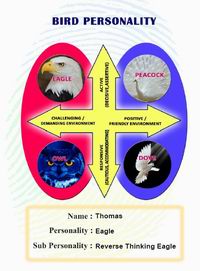
- Bird Personality : Dove
- Bird Personality : Mild Dove
- Bird Personality : Smart Dove
- Bird Personality : Brave Dove
- Bird Personality : Genius Dove
- Bird Personality : Wizard Dove
- Bird Personality : Reverse Thinking Dove
- Bird Personality : Changeable Dove
- Dove Personality in Relationships: How They Show Love