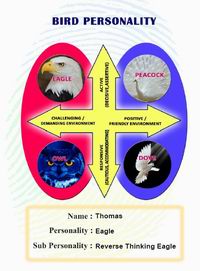
- Bird Personality : Dove
- Bird Personality : Mild Dove
- Bird Personality : Smart Dove
- Bird Personality : Brave Dove
- Bird Personality : Genius Dove
- Bird Personality : Wizard Dove
- Bird Personality : Reverse Thinking Dove
- Bird Personality : Changeable Dove
- Dove Personality in Relationships: How They Show Love
Burnout Test
Think about your work over the past few weeks, and rate how often each statement applies.
Please answer all questions before submitting.
About the Burnout Test
Burnout is a state of emotional, physical, and mental exhaustion caused by prolonged or excessive stress, most often related to work. Unlike everyday stress, burnout tends to build up gradually and can leave you feeling emotionally depleted, cynical about your work, and less confident in your abilities. This test is based on three dimensions commonly used to describe burnout: emotional exhaustion, cynicism or detachment, and reduced sense of accomplishment.
The Three Dimensions of Burnout
Emotional Exhaustion: Feeling drained, tired, and depleted of emotional and physical resources.
Cynicism / Detachment: A growing sense of indifference or negativity toward your work and the people involved in it.
Reduced Sense of Accomplishment: Feeling less effective, competent, or proud of what you achieve, even when objectively doing fine.
How Burnout Differs From Ordinary Stress
Occasional stress is a normal part of a demanding job and usually eases once the pressure passes. Burnout, on the other hand, tends to be more persistent — it doesn't fully go away after a weekend off, and it often comes with a sense of cynicism or emotional numbness that ordinary stress doesn't. If you're also curious about your day-to-day stress levels specifically, our Stress Level Assessment looks at that in more detail.
How to Use Your Results
If your Emotional Exhaustion or Cynicism scores are high, it may help to look for ways to reduce your workload, set clearer boundaries, or build in real recovery time rather than just "pushing through." If your Sense of Accomplishment score is low, try to reconnect with the parts of your work that originally felt meaningful, and consider talking to a manager, mentor, or mental health professional if the feeling persists. Burnout is common and recoverable, but it usually requires changing something about your workload, environment, or support system — not just willpower.
What does the Burnout Test measure?
It measures three dimensions of burnout: emotional exhaustion, cynicism or detachment, and reduced sense of accomplishment.
How is burnout different from ordinary stress?
Ordinary stress usually eases once the pressure passes, while burnout is more persistent and often comes with emotional numbness or cynicism that doesn't go away after a break.
How many questions are in the test?
The test has 12 questions about how often you've experienced certain feelings related to work over the past few weeks.