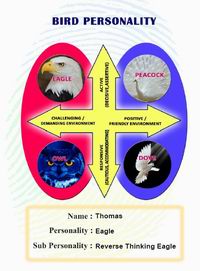
- Bird Personality : Dove
- Bird Personality : Mild Dove
- Bird Personality : Smart Dove
- Bird Personality : Brave Dove
- Bird Personality : Genius Dove
- Bird Personality : Wizard Dove
- Bird Personality : Reverse Thinking Dove
- Bird Personality : Changeable Dove
- Dove Personality in Relationships: How They Show Love
Emotional Intelligence (EQ) Test
Rate how much each statement applies to you.
Please answer all questions before submitting.
About the Emotional Intelligence (EQ) Test
Emotional intelligence (EQ) is the ability to recognize, understand, and manage your own emotions, while also recognizing and influencing the emotions of the people around you. Unlike IQ, EQ isn't fixed — it's a set of skills that can be developed with awareness and practice. This test looks at four core components of emotional intelligence to give you a snapshot of your current strengths and growth areas.
The Four Components of EQ Measured
Self-Awareness: Your ability to recognize your own emotions and understand how they affect your thoughts and behaviour.
Self-Regulation: Your ability to manage disruptive emotions and impulses, staying composed under pressure.
Empathy: Your ability to sense and understand the emotions and perspectives of other people.
Social Skills: Your ability to build rapport, communicate effectively, and navigate relationships and conflict constructively.
Why Emotional Intelligence Matters
Research consistently links higher emotional intelligence to stronger relationships, better leadership, and more effective conflict resolution — both at work and at home. People with high EQ tend to communicate more clearly, stay calmer during stressful moments, and build trust more easily with the people around them. Because EQ is learnable, understanding where you currently stand is the first step toward strengthening it.
How to Use Your Results
If your Self-Awareness score is lower, try pausing during the day to name what you're feeling and why. If Self-Regulation needs work, practice a brief pause before responding when you feel triggered. To build Empathy, focus on genuinely listening before responding in conversations. And if Social Skills is your growth area, look for small opportunities to practice direct, constructive communication in low-stakes situations before higher-stakes ones.
What does the Emotional Intelligence (EQ) Test measure?
It measures four components of emotional intelligence: self-awareness, self-regulation, empathy, and social skills.
How many questions are in the EQ Test?
The test has 12 questions, three for each of the four EQ components.
Can emotional intelligence be improved?
Yes. Unlike IQ, EQ is a set of skills that can be developed over time through self-awareness and practice.