Toxic Relationship Signs in Long-Term Marriages
A toxic marriage is one where a repeated pattern of contempt, control, or fear shapes daily life, and where raising the problem gets you punished or dismissed. In long marriages the pattern builds slowly, so most people cannot name the day it started. They only notice that they are more careful, more tired, and less themselves than they were ten years ago.
This article covers the signs that show up in marriages of ten, twenty, or thirty years, how they differ from ordinary rough patches, and what options exist. It is general information, not a diagnosis of your marriage. If you are afraid of your spouse, skip to the safety section near the end.
What makes a long-term marriage toxic and not just unhappy?
An unhappy marriage involves distance, boredom, or unresolved disagreements, but both people still treat each other with basic respect. A toxic marriage involves a pattern in which one or both partners use contempt, control, or intimidation, and the relationship leaves one person consistently diminished.
The difference shows up in the questions you ask yourself. In an unhappy marriage you ask, "Are we still right for each other?" In a toxic one you ask, "What will happen if I say this?" Fear of the reaction is the more reliable signal.
| Situation | Ordinary rough patch | Toxic pattern |
|---|---|---|
| Money | You disagree about a purchase and talk it through | One spouse controls all accounts and questions every expense |
| Arguments | Voices rise, then both cool down and apologize | Mocking, name-calling, or days of silent treatment as punishment |
| Friends and family | Spouses prefer different social lives | One spouse discourages or sabotages your contact with people you love |
| Feedback | You can say "that hurt" and be heard | Raising a concern leads to anger, blame, or being told you are too sensitive |
| Decisions | Big choices are made together | One spouse decides and the other adjusts |
| Affection | Intimacy fades during stress and returns | Affection is offered as a reward and withheld as punishment |
Eight signs of a toxic long-term marriage
- Contempt. Eye-rolling, sneering, mocking tone, and sarcasm aimed at your character. John Gottman has described contempt as the strongest predictor of divorce among the behaviors he studied.
- Constant criticism of who you are. A complaint is "the dishes weren't done." A criticism is "you're lazy and always have been." The second one attacks the person and gives no way to improve.
- Stonewalling used as punishment. Silence after an argument can be a cool-down. Silence lasting days, with the goal of making you beg, is control.
- Isolation from your support network. Your spouse picks fights before family visits, belittles your friends, or makes socializing costly enough that you stop. After ten years you may notice you have no one to call.
- Financial control. You are given an allowance, kept off the accounts, or required to justify purchases. Financial control appears in many abusive relationships because it limits your ability to leave.
- Gaslighting. Your spouse denies things they said, rewrites events, or tells you your memory is faulty. After years you may start keeping notes to check your own sanity.
- Walking on eggshells. You plan what to say, check the mood before bringing up problems, and rehearse conversations. This is exhausting, and it is one of the clearest signs that fear is shaping your behavior.
- A lopsided load of effort. You do the emotional work, remember the birthdays, repair the arguments, and manage the household, while your efforts are ignored or criticized. One partner has become the manager of the other's moods.
Why do toxic marriages go unnoticed for years?
Long marriages hide toxic patterns because the changes arrive in small steps and because leaving costs a great deal. A spouse who criticizes your cooking in year one may be mocking your intelligence in year fifteen, and no single week felt like the turning point.
Other forces keep people in place. Shared finances, children, a mortgage, a shared social circle, religious or family expectations, and the sheer weight of the years invested all make the decision feel enormous. Many people also compare their marriage to those of their friends and conclude theirs is normal, since nobody shares the worst details.
I think the phrase "it's not that bad" does the most damage here. It sets the bar at violence, so anything below that gets ignored. A marriage can be harmful without a single raised fist.
What are the four behaviors Gottman warns about?
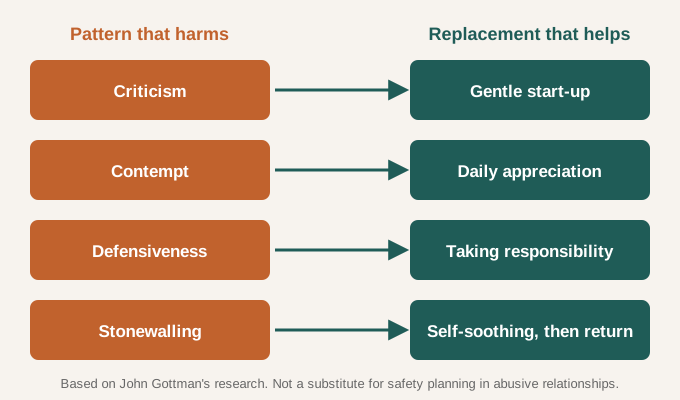
John Gottman and his colleagues at the University of Washington watched couples argue in a laboratory for decades and followed them over time. He named four behaviors the "Four Horsemen" because they predicted relationship breakdown: criticism, contempt, defensiveness, and stonewalling. Each has a counterpart that works better.
| Behavior | Example | Healthier replacement |
|---|---|---|
| Criticism | "You never think about anyone but yourself." | A gentle start: "I felt alone at dinner. Can we plan Friday together?" |
| Contempt | "You're pathetic." plus an eye-roll | Building appreciation: naming one thing you value about them each day |
| Defensiveness | "It's not my fault, you started it." | Taking responsibility for even a small part of the problem |
| Stonewalling | Leaving the room without saying when you'll return | Self-soothing: "I need twenty minutes, then I'll come back to this." |
One caution. Gottman's work describes couples in which both partners engage in conflict. It is not a framework for abuse, where one person holds power over the other. If you are being intimidated, controlled, or hurt, communication skills will not fix a relationship in which one partner is unwilling to treat the other as an equal.
What is coercive control, and how does it show up in marriage?
Coercive control is a pattern of behavior that dominates a partner through isolation, monitoring, financial restriction, humiliation, and threats, often without physical violence. Sociologist Evan Stark described the concept in his 2007 book Coercive Control, and England and Wales made controlling or coercive behavior in an intimate relationship a criminal offense in December 2015 under the Serious Crime Act 2015.
Examples include checking your phone and location, deciding what you wear, tracking your spending, setting rules for who you may see, and threatening to take the children or leave you with nothing. It can occur in a marriage that looks fine from the outside, and the controlling partner is often well-liked by friends and colleagues.
What personality patterns appear in toxic marriages?
Personality types do not cause toxic marriages, and no bird type is "the toxic one." Still, certain tendencies get weaponized when they are unchecked. Eagle bluntness can turn into domination, Doves may swallow resentment for years and then withdraw, Owls can use cold logic as a weapon in arguments, and Peacocks may turn charm and sarcasm into a means of belittling.
These patterns are worth knowing because they make the pattern easier to recognize, not because they excuse it. Behavior is a choice, and a spouse who is "just direct" still owes you respect.
What can you do if your marriage has these signs?
Your options depend on whether the problem is mutual conflict or one person's control, and the safest path differs for each. Steps for a marriage with high conflict but no fear:
- Describe the pattern to your spouse using a specific example and a request, and see how they respond over a month or two.
- Try couples therapy with a therapist trained in a method such as Gottman Method or emotionally focused therapy. Look for someone who asks about safety in the first sessions.
- Rebuild contact with friends and family you have drifted from.
- See an individual therapist, even if your spouse refuses to go. Changing how you respond often changes the pattern.
Couples therapy is often a poor fit when one spouse is afraid of the other. Many domestic violence organizations advise against it in that situation, since the abusive partner can retaliate for what is said in session. Individual counseling or a domestic violence advocate is a safer starting point.
What if you are afraid of your spouse?
Fear is the signal to prioritize safety over fixing the marriage. In the United States, the National Domestic Violence Hotline answers at 1-800-799-7233 at any hour, and you can also text START to 88788. In other countries, search for the local domestic abuse helpline. Advocates can talk through a safety plan without pushing you to leave before you are ready.
Practical steps include keeping copies of important documents (passports, birth certificates, bank statements) somewhere your spouse cannot find them, setting aside some cash, and telling one trusted person what is happening. Clear your browser history if your spouse monitors your devices, or use a library or a friend's computer. The period right after leaving can be the most dangerous, so planning with an advocate matters.
Can a toxic marriage be repaired?
Sometimes, but only when both people acknowledge the pattern and the harmful partner is willing to change specific behaviors over a long period. Repair involves visible actions, such as ending financial control, attending therapy consistently, and accepting consequences. Apologies and promises alone do not count. A change that lasts a few weeks after a crisis and then fades is a familiar pattern.
Whether you stay or go, the decision is yours, and no outsider can weigh your safety, your children, your finances, and your values for you. A reasonable first step is to write down five specific incidents from the past year. Seeing them on paper often settles the question of whether this is rough patch or a pattern.
Frequently asked questions
What are the first signs of a toxic marriage?
Early signs include a rise in sarcasm or contempt, growing fear of your spouse's reaction, shrinking contact with friends and family, and one partner making most decisions. Any one of these can come from stress. A cluster that continues for months points to a pattern.
Can a toxic marriage become healthy again?
It can if both partners recognize the problem and the harmful behavior changes in a measurable way, usually with professional help. Gottman's research shows that couples can replace criticism and contempt with gentler habits. If one partner is controlling or abusive, change requires that partner's sustained effort and a safe environment for the other.
How do you know if it is time to leave a long marriage?
Leaving deserves serious consideration when you fear for your safety, when the other person refuses to acknowledge or change a harmful pattern, or when you have tried honest repair for a long period without change. A therapist or advocate can help you weigh the decision. Staying for years does not obligate you to stay longer.
Is silent treatment a form of abuse?
Occasional silence to cool down is normal. Silence used to punish, lasting days, and ended only when you apologize or give in is emotional manipulation and can be part of coercive control. The test is whether the silence is a pause or a penalty.
Does couples counseling work for toxic relationships?
It works for high-conflict couples who both want change, particularly with a trained therapist. It is generally not recommended when one partner is abusive or the other is afraid, because honest talk in session can lead to retaliation at home. In those cases start with individual support.
How can I support a friend in a toxic marriage?
Listen without pressure, say you believe them, and avoid criticizing their spouse harshly, since they may defend the spouse and pull away. Offer concrete help like a place to stay or a ride, and share the hotline number. Leaving is their decision, and staying in contact is the most useful thing you can do.
- The Best Career Paths for Creative Thinkers
- 10 Simple Habits for a Happier Life
- Personality Traits for Effective Team Leadership
- Bird Personality : Wizard Peacock
- The Top 10 In-Demand Careers for Today and Beyond
- Bird Personality : Reverse Thinking Peacock
- 32 Words of Kindness for the Important People in Your Life