Famous People With an Eagle Personality Type
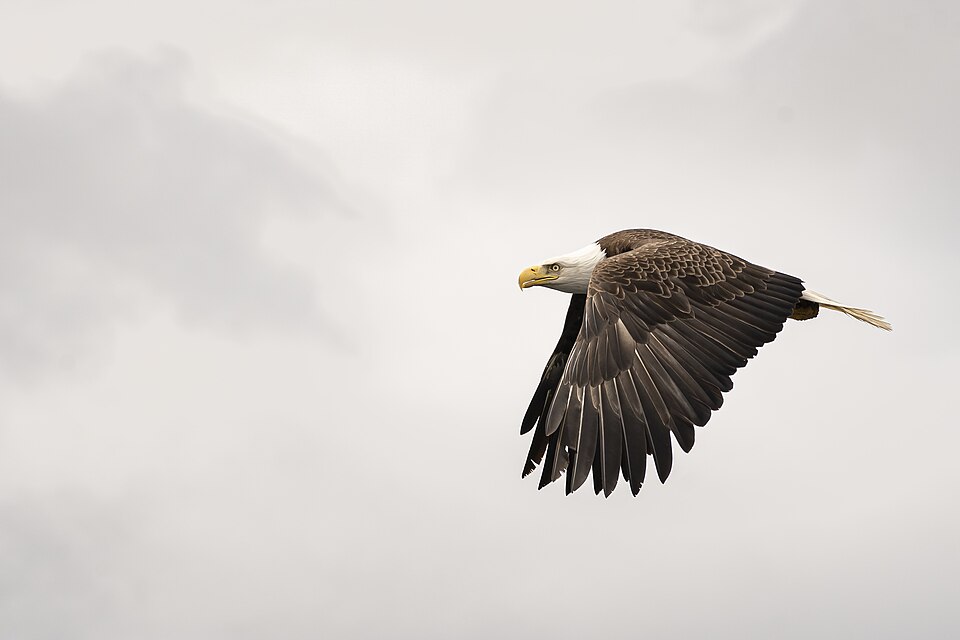
The eagle personality type is the dominant, decisive, results-focused type in the bird personality model, which maps to the "D" in DISC. Public figures often described this way include Margaret Thatcher, Steve Jobs, Michael Jordan, Serena Williams, Jeff Bezos, Winston Churchill, and Lee Kuan Yew. None of them has published a bird personality result, so each placement below comes from documented behavior, not a test score.
I want to say that plainly at the start, because lists like this one tend to treat guesses as facts. If someone tells you a famous person "is" an eagle, they mean that the person's public behavior fits the pattern. Take it as an illustration of the type, not a diagnosis.
What defines an eagle personality?
Eagles make fast decisions, push for results, and tolerate conflict better than most people. The type comes from the DISC framework, which traces to William Moulton Marston's 1928 book Emotions of Normal People. Marston described four behavior styles, and the dominance style is the one this site calls the eagle.
Typical eagle behaviors include taking charge in a vacuum, speaking bluntly, setting high targets, and getting impatient with slow processes. The usual weaknesses are overriding other people, treating disagreement as disloyalty, and neglecting the emotional side of a team. You can read more in the full eagle personality profile.
Which famous people have an eagle personality type?
The people below show eagle behavior in documented, public ways. Each has also paid a price for it, which is part of why the type is worth understanding.
| Person | Field | Eagle behavior on record | Documented cost |
|---|---|---|---|
| Margaret Thatcher | Politics | Pushed through unpopular reforms during 11 years as UK prime minister (1979 to 1990) | Forced out in 1990 after her cabinet turned on her |
| Steve Jobs | Technology | Rejected product designs he disliked and demanded rebuilds | Removed from Apple in 1985 |
| Michael Jordan | Basketball | Drove teammates hard in practice, won six NBA titles (1991 to 1993, 1996 to 1998) | Punched teammate Steve Kerr in a 1995 practice |
| Serena Williams | Tennis | Won 23 Grand Slam singles titles, the most in the Open era | Penalized in the 2018 US Open final after a dispute with the umpire |
| Jeff Bezos | Business | Founded Amazon in 1994 and ran it as CEO until 2021 | Reports of a demanding culture, including a 2015 New York Times article |
| Winston Churchill | Politics | Led Britain as prime minister from 1940 through the end of the war | Lost the July 1945 election to Clement Attlee |
| Lee Kuan Yew | Politics | Prime minister of Singapore from 1959 to 1990, guided it through independence in 1965 | Criticized for restricting opposition and the press |
Margaret Thatcher: what does a political eagle look like?
Thatcher's record is an unusually clear example. A Soviet army newspaper called her the "Iron Lady" in 1976, and she adopted the nickname. She fought the miners' strike of 1984 to 1985 without bending, and she overruled senior colleagues on privatization and on the poll tax.
The same trait ended her time in office. Her poll tax provoked riots in 1990, and when Geoffrey Howe resigned and criticized her style in the House of Commons, her own cabinet stopped backing her. She resigned in November 1990. Eagles often do not see the cliff because the people who would warn them have learned that warnings are unwelcome.
Steve Jobs: why did Apple remove its own founder?
Jobs showed several eagle patterns at once. Walter Isaacson's 2011 biography describes his "reality distortion field," a mix of charisma and insistence that made colleagues believe the impossible was achievable. Isaacson also describes Jobs rejecting the plastic screen on an early iPhone prototype and demanding glass a few months before the 2007 announcement, which forced a scramble at the supplier.
Apple's board sided with John Sculley and pushed Jobs out of his operating role in 1985. He returned in 1997 when Apple bought NeXT, the company he had started in the meantime, and the second tenure is the one people remember. Several accounts describe the same man as calmer and more willing to listen the second time, which I find notable. Eagles can change, but it usually takes a hard knock.
Michael Jordan and Serena Williams: what does a competitive eagle look like?
Athletes with the eagle profile treat practice as competition. The 2020 documentary The Last Dance showed Jordan berating teammates in practice, and a punch thrown at Steve Kerr in 1995 is well documented. Kerr later hit the winning shot in the 1997 NBA Finals. His story is a useful counterpoint: eagle pressure pushes some people to improve.
Jordan's 2009 Hall of Fame speech listed people who had doubted him, and some viewers found it petty. That detail is typical eagle behavior, since the record of slights is kept and used as fuel.
Serena Williams won 23 Grand Slam singles titles, the most in the Open era, and she won the 2017 Australian Open while about eight weeks pregnant. In the 2018 US Open final, she argued with the chair umpire and received a game penalty. Her willingness to challenge authority openly is characteristic, though many observers argued the penalty was harsher than what male players received for similar conduct, which complicates a simple "temper" reading.
Jeff Bezos, Winston Churchill, and Lee Kuan Yew: where do eagles lead institutions?
Bezos built his reputation on quick decisions made with incomplete information. In his 2016 letter to shareholders, he described a rule he called "disagree and commit," which asks people to stop arguing and execute once a decision is made. The idea is useful in eagle-led companies because it reduces endless debate. A 2015 New York Times article described Amazon's white-collar culture as grueling, and Bezos responded that it did not match the company he ran.
Churchill became prime minister in May 1940, the week Germany invaded France and the Low Countries, and refused to negotiate with Hitler. His supporters regard it as the key decision of the war. Voters removed him from office in July 1945, shortly after victory in Europe, because they trusted Labour more with domestic policy. Eagle strengths fit a crisis. They fit peacetime less well.
Lee Kuan Yew led Singapore from 1959, through separation from Malaysia in 1965, until stepping down as prime minister in 1990. Singapore's income per person rose from roughly $500 in 1965 to more than $50,000 by 2015. The country's critics point to curbs on the press and on opposition politicians. The eagle trade-off appears here at national scale: outcomes, and control.
What do these eagles have in common?
All seven made decisions that others hesitated over, and all of them also left a record of damaged relationships or sudden exits. Three patterns repeat.
- They won when the situation needed speed. Churchill in 1940 and Jobs in the 1997 turnaround both faced a crisis where deliberation was a luxury.
- They struggled when the situation needed consensus. Thatcher's cabinet in 1990 and Churchill's electorate in 1945 both withdrew support once the emergency ended.
- Their strongest results came with someone who could say no. Jobs had Jony Ive and Tim Cook, and Bezos had a senior team willing to push back. An eagle surrounded by yes-people tends to repeat the same mistakes with more force.
Are you an eagle yourself?
Possibly. Fame has nothing to do with it. If you step in when a group stalls, answer messages with one-line decisions, and feel restless in meetings with no outcome, you may share the pattern. The bird personality test can show where you land, and the 12 signs of an eagle article lists the everyday behaviors in more detail.
If the result is an eagle, the lesson from the people above is practical. Ask one person you trust to tell you when you are steamrolling, and give them permission to do it without punishment. Thatcher in 1990 had nobody like that left in the room.
Frequently asked questions
Who are some famous eagle personality types?
Margaret Thatcher, Steve Jobs, Michael Jordan, Serena Williams, Jeff Bezos, Winston Churchill, and Lee Kuan Yew are often described as eagles because of their decisive, competitive, and commanding behavior. None has published an official bird personality result, so these are interpretations of public behavior.
What is the eagle personality in DISC?
The eagle matches the Dominance style in DISC, a framework traced to William Moulton Marston's 1928 book. People with this style are direct, fast, and results-oriented. They tend to value control over their environment and dislike slow or ambiguous processes.
Are eagle personalities good leaders?
They are effective in crises and in turnarounds, where a fast decision matters more than agreement. They are weaker when a team needs to feel heard. Eagles lead best with advisors who can disagree openly, since the eagle will rarely ask for objections.
What is the biggest weakness of an eagle personality?
The biggest weakness is overriding other people. Eagles can mistake speed for correctness and treat dissent as resistance. Over time, colleagues stop raising problems, and the eagle loses access to the information that would prevent mistakes.
Can an eagle personality change?
Behavior can change even if the underlying tendency stays. Several accounts describe Jobs' second tenure at Apple as calmer than his first. Research on adult personality shows people become more emotionally stable and conscientious over time, so an eagle at 50 is often easier to work with than at 25.
Is the eagle personality type the same as a Type A personality?
They overlap but are not the same. Type A, described by cardiologists Meyer Friedman and Ray Rosenman in the 1950s, focuses on urgency, competitiveness, and hostility. The eagle type describes a broader behavior style that includes decisiveness and directness, and it does not require the hostility part of Type A.
- Bird Personality : Reverse Thinking Peacock
- 11 Ways to Overcome Pessimism
- How to be Successful in Life - 40 Powerful Tips
- Parenting a Dove Personality Child: Building Their Confidence
- Identify Your Strengths and Weaknesses as a Leader
- The Hidden Costs of Suppression: Understanding the Negative Impact on Well-Being
- 3 Ways to Change Yourself: Embrace Growth and Transformation
- Bird Personality : Dove
- Bird Personality : Mild Dove
- Bird Personality : Smart Dove
- Bird Personality : Brave Dove
- Bird Personality : Genius Dove
- Bird Personality : Wizard Dove
- Bird Personality : Reverse Thinking Dove
- Bird Personality : Changeable Dove
- Dove Personality in Relationships: How They Show Love