Toxic Relationship Signs Backed by Psychology

Psychology research points to a short list of reliable toxic relationship signs: habitual contempt, constant criticism, stonewalling, controlling behavior, gaslighting, and a cycle of cruelty followed by affection. One bad fight does not make a relationship toxic. A repeated pattern that leaves you smaller, more anxious, or more isolated than you were before does.
I have sat with friends who described a partner's behavior in careful, excusing language, then paused and said, "Okay, that sounds bad when I say it out loud." That pause is common. Toxic patterns rarely announce themselves, and most of them were studied for decades before they got popular names.
What makes a relationship toxic according to psychology
A relationship is toxic when one or both people repeatedly behave in ways that damage the other person's well-being, and the damage continues after it has been pointed out. The word is informal, so researchers usually work with narrower terms: emotional abuse, coercive control, hostile conflict, and low relationship quality.
Frequency and direction matter more than intensity. Two people who argue loudly but repair afterward are in a different situation from a couple who never raise their voices but one of them is monitored, belittled, and cut off from friends. The second pattern is the one clinicians worry about.
This also applies beyond romance. Parents, friends, and coworkers can run the same patterns, and the research on conflict and control carries over with small adjustments.
Which toxic relationship signs does research back up
Seven signs have the strongest support in the psychological literature. The table below lists each one with the researcher or finding behind it and what it looks like day to day.
| Sign | Research behind it | What it looks like |
|---|---|---|
| Contempt | John Gottman, University of Washington, 1990s couples studies | Eye-rolling, mockery, sneering, name-calling during disagreements |
| Chronic criticism | Gottman's "Four Horsemen" model | Attacks on character ("you're lazy") instead of complaints about an action |
| Stonewalling | Gottman and Levenson, physiological studies of conflict | Going silent, leaving the room, or answering with one word for days |
| Coercive control | Evan Stark, "Coercive Control" (2007) | Tracking your phone, controlling money, deciding who you see |
| Gaslighting | Clinical and counseling literature on emotional abuse | Denying events you remember clearly, then calling you too sensitive |
| Intermittent cruelty and affection | Dutton and Painter, 1981, on traumatic bonding | Warm weeks, then punishment, then apologies that restart the cycle |
| Isolation | Research on intimate partner violence risk factors | Friends and family gradually described as bad influences |
Why contempt is the strongest warning sign
Contempt, the open expression of disgust or superiority toward a partner, is the best single predictor of relationship breakdown that Gottman's lab identified. Over decades of watching couples discuss conflicts in a lab apartment, his team coded facial expressions, tone, and heart rate. Couples who showed contempt were more likely to divorce, and their partners were more likely to report physical illness.
Contempt differs from anger. Anger says "I'm upset about this." Contempt says "you are beneath me." A sarcastic "Wow, great job, genius" belongs to the second category, no matter how light the delivery.
Gottman's other three horsemen travel with it. Criticism attacks the person, defensiveness turns every complaint into a counter-complaint, and stonewalling shuts the conversation down. Most unhappy couples show several of them in the same argument.
What gaslighting and coercive control look like in daily life
Gaslighting is a pattern in which one person systematically makes the other doubt their own memory or sanity. The term comes from the 1938 play "Gas Light" and the 1944 film adaptation, where a husband dims the house lights and insists his wife is imagining it.
In real life the version is usually smaller. A partner says "I never said that" about something you remember clearly. A text message you saved gets described as "not what I meant," and within a few weeks you stop trusting your own account of events. People who live like this often start keeping notes or screenshots, which is a signal worth taking seriously.
Coercive control covers the broader system around it. Sociologist Evan Stark argued in 2007 that the central harm in many abusive relationships is the loss of liberty, not any single act of violence. England and Wales made controlling or coercive behavior in an intimate relationship a criminal offense in 2015 under section 76 of the Serious Crime Act.
- Your partner reads your messages or demands your passwords, and calls refusal proof you are hiding something.
- You hand over your paycheck, or need permission to buy groceries.
- Time with friends triggers a fight, so you stop scheduling it.
- You rehearse what you will say before bringing up small things.
Why people stay in toxic relationships
People stay because the relationship is not bad all the time, and because leaving carries real costs. Psychologists Donald Dutton and Susan Painter described "traumatic bonding" in 1981 after studying women in abusive relationships. Their finding was that alternating periods of mistreatment and warmth create a stronger attachment than steady kindness does.
The mechanism is close to what B.F. Skinner described as variable-ratio reinforcement. When rewards arrive unpredictably, behavior persists. The affectionate days become the thing you wait for, and the cruel days feel like the price.
Money, shared housing, children, immigration status, and shame are also on the list. Telling someone "just leave" ignores all of them. The period right after leaving is also when risk of violence is highest in abusive relationships, which is why advocates recommend a safety plan rather than a dramatic exit.
Can personality type make you more likely to stay
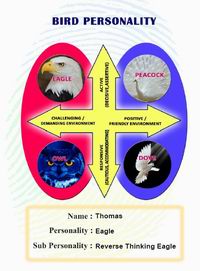
Personality does not cause anyone to be abused, and no type deserves it. It does shape which pattern feels familiar. In the DOPE bird framework used on this site, the dove tends to prioritize harmony and may absorb a partner's behavior for years to avoid a fight. An owl may rationalize, building a logical case for why the situation is acceptable. A peacock may keep up a cheerful public image. An eagle is more likely to confront early, but can mistake a power struggle for passion.
Knowing your tendencies helps you spot the point where your usual coping style is working against you. If you want a starting point, the bird personality test takes a few minutes and gives you a vocabulary for it.
How to tell a rough patch from a toxic pattern
Four questions separate the two. Ask them about the last three months, not the last three days.
- Does repair happen? In healthy conflict, someone apologizes, and the apology comes with a changed behavior. If apologies come but nothing changes, the apology is part of the cycle.
- Do you feel safe saying you disagree? If you screen your opinions before speaking, your body has already answered the question.
- Is your world getting smaller? Count how many friends you saw this month compared with a year ago, and whether the change was your choice.
- Is the criticism about behavior or about you? "You left the dishes again" can be fixed. "You never think about anyone" cannot.
Gottman also found that stable couples kept a ratio of about five positive interactions for every negative one during conflict discussions. The exact number is less important than the direction. If most of your interactions with someone leave you tense, the ratio is not in your favor.
What to do if you recognize these signs
Start by telling one person you trust what is happening, in specific terms. Naming concrete incidents ("he checked my phone on Tuesday and threw it when I objected") makes patterns easier to see than a general feeling of unhappiness does.
A therapist trained in couples work can help with hostile conflict where both people want change. Couples therapy is a poor fit when one person is afraid of the other, because honest talk in the room can bring retaliation at home. In that case, individual counseling or a domestic violence advocate is the better route.
In the United States, the National Domestic Violence Hotline (1-800-799-7233, or text START to 88788) offers free, confidential support around the clock, including to people who are only unsure whether what they are living through counts. If you are in immediate danger, call your local emergency number.
You do not need to be certain, or to have decided anything, before you ask for help. Writing down what has happened, with dates, takes ten minutes and gives you something concrete to hold if you do decide to act.
Frequently asked questions
What is the most common sign of a toxic relationship?
Chronic criticism and contempt are the most commonly documented signs. In Gottman's research, couples who regularly mocked or belittled each other during disagreements were more likely to separate than couples who argued often but respectfully. Controlling behavior is less common but more dangerous.
Is a toxic relationship the same as an abusive relationship?
No, though they overlap. "Toxic" is an informal label for a relationship that harms one or both people, including constant hostility or manipulation. "Abusive" refers to a pattern of using fear, control, or violence to dominate a partner, and it may involve legal consequences.
Can a toxic relationship be fixed?
Sometimes. Relationships built on mutual hostility, such as two people who both criticize and stonewall, can improve with couples therapy when both commit to changing specific behaviors. A relationship where one partner controls or frightens the other usually cannot be repaired through couples work and needs a safety-focused approach first.
How long does it take to recover after leaving a toxic relationship?
There is no standard timeline. Many people report feeling disoriented or doubting their own judgment for several months, and some need a year or longer, especially after gaslighting or financial control. Working with a therapist who knows about emotional abuse tends to shorten that stretch.
Why do I miss someone who treated me badly?
Alternating cruelty and affection builds a stronger emotional attachment than consistent kindness does. Dutton and Painter called this traumatic bonding in 1981. Missing the person is a predictable result of that pattern, not evidence that the relationship was good.
Do toxic relationship signs apply to friendships and family?
Yes. Contempt, control, gaslighting, and isolation show up between friends, siblings, parents, and adult children in the same forms. The difference is that friendships are easier to leave, while family ties carry more obligation and guilt.
- Bird Personality : Dove
- Bird Personality : Mild Dove
- Bird Personality : Smart Dove
- Bird Personality : Brave Dove
- Bird Personality : Genius Dove
- Bird Personality : Wizard Dove
- Bird Personality : Reverse Thinking Dove
- Bird Personality : Changeable Dove
- Dove Personality in Relationships: How They Show Love