Science-Backed Benefits of Eating Nutritious Foods
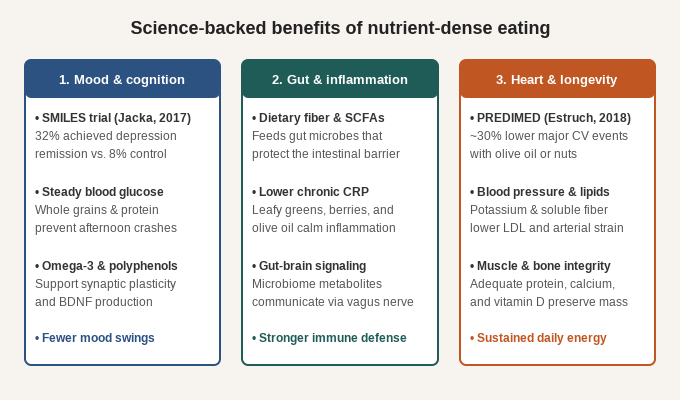
Eating nutritious, minimally processed foods lowers your risk of cardiovascular disease, improves clinical depression symptoms, stabilizes daily blood glucose, and protects gut barrier integrity. These benefits come from synergistic nutrients—fiber, polyphenols, unsaturated fats, vitamins, and minerals—working together in whole foods rather than isolated supplements.
Two landmark clinical trials illustrate how strongly food patterns shape both body and mind. In the 2017 SMILES randomized controlled trial led by Felice Jacka and published in BMC Medicine, 32% of adults with moderate-to-severe depression who switched to a modified Mediterranean diet achieved full remission after 12 weeks, compared to 8% in a social-support control group. On the cardiovascular side, Ramon Estruch and colleagues reported in the 2018 New England Journal of Medicine (PREDIMED trial) that a Mediterranean diet supplemented with extra-virgin olive oil or nuts cut major cardiovascular events by roughly 30% among high-risk adults.
Nutrition advice online often swings between rigid fad rules and guilt-tripping. Stepping back to look at controlled human trials makes the picture refreshingly straightforward: you do not need exotic powders or zero-carb perfection to see measurable gains in energy, mood, and long-term health.
Mental health and mood stability
Your brain consumes roughly 20% of your daily energy despite accounting for about 2% of your body weight, so steady fuel and low systemic inflammation affect how you feel from morning to night. Before the SMILES trial in 2017, observational surveys showed that people who ate vegetables, legumes, fish, and whole grains had lower depression rates, yet skeptics wondered if depressed people simply had less energy to cook.
Jacka's team tested causation directly by giving 67 adults with major depression either seven sessions with a clinical dietitian or matched social-support sessions while continuing their regular care. Those following the Modified Mediterranean Diet—rich in vegetables, fruit, whole grains, legumes, nuts, olive oil, and oily fish while cutting sweets and processed meats—improved significantly on the Montgomery-Asberg Depression Rating Scale, and closer adherence tracked with greater symptom drops.
Everyday blood sugar stability explains part of why nutritious meals improve focus even if you are not depressed. Pairing complex carbohydrates with protein and healthy fats slows gastric emptying, preventing the sharp glucose spike and mid-afternoon crash that follow a sugary pastry and plain coffee.
| Health system | Key dietary drivers | Documented clinical outcome |
|---|---|---|
| Mood & depression | Vegetables, legumes, whole grains, olive oil, fish | 32% remission vs. 8% control in 12-week SMILES trial (Jacka et al., 2017). |
| Cardiovascular health | Extra-virgin olive oil, nuts, potassium, soluble fiber | ~30% lower rate of major cardiovascular events in PREDIMED (Estruch et al., 2018). |
| Gut microbiome | Prebiotic fiber, fermented foods, plant polyphenols | Higher short-chain fatty acid production and reduced gut-barrier permeability. |
| Metabolic & cognitive | Lean protein, omega-3 fatty acids, B vitamins | Steadier post-meal glucose, preserved muscle mass, and lower systemic CRP inflammation. |
Cardiovascular protection and blood pressure control
Heart disease remains a leading cause of preventable illness worldwide, and dietary patterns shift key risk markers within weeks. Soluble fiber from oats, beans, lentils, apples, and flaxseeds binds bile acids in your digestive tract, prompting your liver to pull LDL cholesterol out of your bloodstream to make more.
Meanwhile, potassium-rich foods like leafy greens, potatoes, bananas, and avocados help your kidneys excrete excess sodium and relax blood vessel walls. In the PREDIMED trial across more than 7,400 Spanish adults at high cardiovascular risk, adding extra-virgin olive oil or mixed nuts to a plant-forward Mediterranean eating pattern lowered the combined incidence of heart attack, stroke, and cardiovascular death compared with a standard low-fat advice group.
What stands out to me about PREDIMED is that participants were not put on a punishing calorie-starvation diet. They added nutrient-dense fats and whole plants, which makes the pattern realistic to keep up for years instead of three miserable weeks. People stick to food habits that actually taste good on a random Tuesday night.
Gut microbiome diversity and lower chronic inflammation
Trillions of bacteria, fungi, and microbes live inside your large intestine, and what you eat decides which species thrive. When you eat diverse plant fibers—beans, onions, garlic, berries, whole grains, and cruciferous vegetables—gut bacteria ferment those fibers into short-chain fatty acids (SCFAs) like butyrate.
Butyrate serves as the primary fuel for the cells lining your colon, keeping your intestinal barrier tight so bacterial toxins do not leak into circulation and trigger chronic low-grade inflammation. High-fiber diets also lower circulating C-reactive protein (CRP), an inflammatory marker linked to joint stiffness, fatigue, and metabolic decline.
By contrast, ultra-processed foods packed with refined starches, emulsifiers, and added sugars get absorbed rapidly in the upper digestive tract, leaving your lower-gut microbes starved. Adding even one fermented food daily—such as plain yogurt, kefir, kimchi, or sauerkraut—alongside 25 to 35 grams of fiber supports microbial diversity without complicated meal plans. Over a few weeks, consistent fiber intake also stabilizes bowel regularity and reduces uncomfortable afternoon bloating.
Sustained energy, muscle preservation, and healthy aging
Nutrient density protects your physical independence as decades pass, not just your lab numbers this year. Adequate protein spread across breakfast, lunch, and dinner supplies essential amino acids—especially leucine—needed to maintain skeletal muscle mass, which naturally declines after age 30 without resistance training and sufficient intake.
Micronutrients do quiet, essential maintenance behind the scenes. Iron and vitamin B12 carry oxygen and support red blood cell formation; magnesium participates in over 300 enzymatic reactions tied to muscle relaxation and ATP energy production; vitamin D and calcium preserve bone mineral density; and marine omega-3 fatty acids (EPA and DHA) support cell membrane fluidity in the brain and retina.
Relying on multivitamins to cover a poor diet misses thousands of bioactive plant compounds—carotenoids, flavonoids, and glucosinolates—that never fit into a single capsule. Whole foods deliver those compounds in natural ratios that your body absorbs and regulates efficiently.
Sleep, circadian rhythm, and cognitive sharpness
Food timing and meal composition also shape how deeply you sleep and how clearly you think the next morning. Diets higher in fiber and lower in saturated fat and added sugar are associated with deeper slow-wave sleep and fewer nighttime awakenings, whereas heavy, greasy late-night meals trigger reflux and fragmented rest. Poor sleep then drives up ghrelin—a hunger hormone—the next day, pushing you toward quick refined carbohydrates and locking in a tiring loop.
Hydration works quietly alongside solid food. Even mild dehydration of 1% to 2% of body weight impairs working memory, slows reaction time, and increases perceived task difficulty, yet people routinely mistake mild thirst for afternoon fatigue or hunger. Keeping a glass of water near your desk and eating water-rich produce like cucumbers, oranges, and tomatoes covers fluid needs without forcing you to chug plain water all evening.
Five simple ways to upgrade your daily nutrition
Overhauling every meal overnight usually collapses by Thursday. Small, repeatable swaps stick because they require minimal willpower when you are tired.
- Add before you subtract. Instead of banning favorite snacks immediately, add a handful of spinach, a cup of berries, or half a cup of black beans to meals you already eat.
- Anchor breakfast with 25–30 grams of protein. Eggs, Greek yogurt, cottage cheese, tofu scramble, or smoked salmon with whole-grain toast blunt mid-morning cravings and keep concentration steady until lunch.
- Make extra-virgin olive oil your default cooking fat. Use olive oil for roasting vegetables, dressing salads, and sauteing, replacing refined seed oils and heavy butter where practical.
- Aim for three different plant colors on your dinner plate. Color variety is a fast visual shortcut for capturing diverse polyphenols without counting milligrams or tracking spreadsheets.
- Keep two 10-minute nutrient-dense backup meals stocked. Canned sardines or chickpeas, frozen mixed vegetables, brown rice pouches, and jarred marinara prevent expensive takeout spirals on late worknights.
Frequently asked questions
How quickly do you feel the benefits of eating more nutritious foods?
Improvements in afternoon energy, digestion, and post-meal alertness often show up within 3 to 7 days of balancing protein, fiber, and healthy fats. Measurable shifts in cholesterol, blood pressure, and clinical mood scores typically take 4 to 12 weeks of consistent eating habits.
Are frozen fruits and vegetables as nutritious as fresh ones?
Yes, frozen produce is usually picked at peak ripeness and flash-frozen within hours, preserving vitamins like vitamin C and folate just as well as—and sometimes better than—fresh produce that sits in transit for a week. Choose plain frozen bags without added cream sauces or heavy sodium.
Do you need organic food to get these health benefits?
No, conventional fruits, vegetables, whole grains, and legumes deliver the same fiber, potassium, and protective polyphenols as organic options. Eating plenty of washed conventional produce beats eating very little produce because of organic grocery prices.
Can supplements replace eating whole nutritious foods?
Supplements help correct specific diagnosed deficiencies like vitamin D, vitamin B12, or iron, yet they do not replicate the health outcomes of whole foods. Whole foods combine fiber, water, protein, and hundreds of phytochemicals that interact during digestion in ways isolated pills cannot match.
What is the single highest-impact change if my diet is mostly processed right now?
Replacing sugar-sweetened drinks with water, unsweetened tea, or coffee and adding one high-fiber whole-food meal per day creates the largest immediate drop in glycemic swings and empty calories without requiring a strict diet.
- Bird Personality : Changeable Owl
- Personality Traits List for Students: A Classroom Guide
- 6 Strategies to Become a More Critical Thinker
- 10 Proven Tips for Developing Social Skills in Children
- 7 Tips For Self-Love
- What Are Temperaments? Understanding the Human Psyche
- About Intrapersonal Intelligence

- Bird Personality : Dove
- Bird Personality : Mild Dove
- Bird Personality : Smart Dove
- Bird Personality : Brave Dove
- Bird Personality : Genius Dove
- Bird Personality : Wizard Dove
- Bird Personality : Reverse Thinking Dove
- Bird Personality : Changeable Dove
- Dove Personality in Relationships: How They Show Love