Are You an Eagle Personality? 12 Signs You Lead Like One
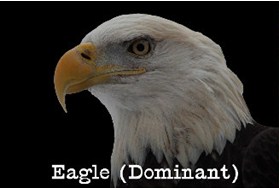
You're likely an Eagle personality if you naturally take charge in group situations, make decisions faster than most people around you, and get more energized by a challenge than intimidated by it. The clearest sign is that people tend to look to you first when a decision needs to get made under pressure.
1. You decide fast, even with incomplete information
Eagles would rather commit to a reasonable decision now than wait for a perfect one later. Waiting feels like the actual risk to them, not the decision itself. This isn't recklessness so much as a genuine comfort with course-correcting mid-flight instead of planning every contingency in advance.
2. You get restless when a group can't agree on anything
Watching five people debate a decision that could be made in two minutes is close to physically uncomfortable for an Eagle. You'll often end up being the one who says “let's just go with this” not because you're impatient by nature in every context, but because indecision itself drains you faster than most people.
3. You take charge without being asked to
In a leaderless situation, Eagles rarely wait for permission to lead. It's not about ego, it's closer to an instinct that someone needs to move things forward and it might as well be you. Other people sometimes read this as bossy, especially early on, before they've seen the results it tends to produce.
4. You'd rather be respected than liked
This is one of the more distinctive Eagle traits. Given a choice between a decision that keeps everyone comfortable and one that actually solves the problem, you'll pick the second one, even knowing it might not be popular. Eagles measure their own performance by outcomes, not by how smooth the process felt to everyone involved.
5. Criticism doesn't wound you the way it wounds other types
Direct feedback tends to land as useful information for an Eagle rather than a personal attack. You'd usually rather someone tell you exactly what's wrong than soften it into something vague and comfortable. This can make you a difficult person to reassure emotionally, since your instinct is to fix the problem rather than sit with the feeling first.
6. You get bored quickly once a challenge is solved
Maintenance mode isn't where Eagles thrive. Once a project stabilizes and stops requiring active problem-solving, interest tends to drop off fast, and you're already scanning for the next thing worth pushing against. This is genuinely useful for growth-stage work and genuinely frustrating in roles that reward steady upkeep over new wins.
7. You struggle to slow down, even when you know you should
I think this is the trait Eagles are least honest with themselves about. Rest doesn't come naturally, and when it's forced, it often feels less like relief and more like an interruption. Burnout tends to sneak up on this type specifically because slowing down reads as a threat to identity, not just a physical need.
8. You're direct, sometimes to a fault
Diplomatic hedging isn't your default mode. You say what you think, plainly, and expect other people to do the same. This works well with people who share that directness and can land harder than intended with more sensitive personalities who need softer delivery to hear the same message.
9. You're comfortable being the one who takes the risk
When a decision carries real consequences and nobody wants to own it, Eagles are usually the ones willing to put their name on it. Not because the risk doesn't register, but because avoiding the decision entirely feels worse to them than being wrong and dealing with it.
10. You measure your day by what got accomplished, not how it felt
A day full of pleasant conversations but no real progress tends to feel wasted to an Eagle, even if everyone else enjoyed it. Productivity isn't just a preference here, it's closer to a requirement for feeling like the day meant something.
11. You have a hard time delegating without micromanaging
Handing off a task is easy. Trusting it'll be done at the standard you'd have done it yourself is the harder part. This is one of the more common growth edges for Eagles at work, since the same drive that makes them effective individually can undercut a team if it isn't checked.
12. Other people's crises calm you down instead of stressing you out
Genuine emergencies tend to bring out an Eagle's best self. While others panic, an Eagle often gets clearer and more focused exactly when the stakes rise, which is part of why this type ends up in leadership roles more often than the numbers alone would predict.
Not every Eagle trait shows up identically, and plenty of people are a mix of Eagle with a strong secondary type underneath. If most of the above sounded uncomfortably accurate, that's usually a better sign than a perfect match on every single point, since real people rarely fit any framework with zero exceptions.
Frequently Asked Questions
Is the Eagle personality type the same as being an extrovert?
Not necessarily. Plenty of Eagles are more reserved socially but still highly decisive and results-driven in how they operate. The Eagle type is more about pace and decision-making style than about how much social energy someone has.
Can an Eagle personality also be a good listener?
Yes, though it's usually not their default mode without effort. Eagles tend to listen for the actionable part of a conversation, which means they can miss the emotional nuance unless they deliberately slow down and check for it.
What careers tend to suit an Eagle personality best?
Roles with real autonomy and visible outcomes tend to fit well, including leadership positions, entrepreneurship, sales, and crisis-driven fields like emergency response. Highly repetitive or slow-paced roles tend to frustrate this type over time.
Do Eagles struggle in relationships?
They can, particularly around slowing down for emotional conversations or admitting uncertainty. Eagles in healthy relationships usually learn to treat emotional check-ins as another kind of problem worth solving well, rather than something to rush past.
What's the biggest growth area for an Eagle personality?
Patience with process, and with people who need more time to arrive at the same decision. Learning that slower isn't always weaker tends to be the single biggest shift that makes an Eagle more effective as they mature.
This reflects general personality patterns for self-reflection rather than a clinical assessment. If this list resonated, the full Bird Personality Test or the DOPE Test can give you a more complete picture of where you land across all four types.
- Bird Personality : Wizard Dove
- Peacock Personality in Relationships: What Makes Them Fall in Love
- Eagle Personality in Relationships: What to Expect
- The Impact of the Silent Treatment in Relationships
- 3 Ways to Change Yourself: Embrace Growth and Transformation
- How To Write A Personal Vision Statement For Your Life?
- How to Develop Your Intuition
- Bird Personality : Dove
- Bird Personality : Mild Dove
- Bird Personality : Smart Dove
- Bird Personality : Brave Dove
- Bird Personality : Genius Dove
- Bird Personality : Wizard Dove
- Bird Personality : Reverse Thinking Dove
- Bird Personality : Changeable Dove
- Dove Personality in Relationships: How They Show Love