Owl Personality Growth Areas: Overcoming Overanalysis
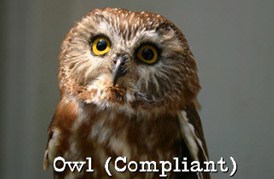
The biggest growth area for Owl personalities is overanalysis, the habit of gathering more information and weighing more angles than a decision actually requires. It shows up as delayed choices, unsent messages, and a quiet exhaustion from thinking through situations that other people would have moved past hours or days earlier.
Why do Owl personalities overanalyze in the first place?
Owls are wired to value accuracy and thoroughness, and in most contexts that is a genuine strength. The problem shows up when the desire for a fully correct answer collides with situations that do not actually have one, relationships, career changes, parenting decisions, most of the messy human stuff. There, more analysis does not produce more certainty, it just produces more analysis. Owls often mistake the feeling of having thought about something carefully for the feeling of having actually resolved it, and those are not the same thing.
What does chronic overanalysis actually cost an Owl personality over time?
The most visible cost is delay. Decisions that could be made in a day stretch into weeks because one more piece of information always feels like it would help. The less visible cost is relational. Partners, friends, and colleagues can experience an Owl's need to fully think things through as distance or indecision, even when the Owl is deeply engaged internally. Silence reads as absence to other people, even when it is actually concentration.
There is also an emotional cost that Owls sometimes miss entirely. Overanalyzing a conflict or a hurt feeling can function as a way to avoid actually feeling it. Thinking about an emotion in careful detail is not the same as processing it, and an Owl can spend hours analyzing a feeling while never quite letting themselves have it.
How can an Owl tell the difference between careful thinking and avoidance dressed up as analysis?
One useful test: has new, genuinely relevant information come in during the last round of thinking, or are you just replaying the same considerations in a different order? If it is the latter, the analysis has likely stopped being productive and started being a way to postpone the discomfort of actually deciding or feeling something. Owls tend to trust the process of thinking so much that they rarely question whether the thinking itself has become the obstacle.
What actually helps an Owl move from endless analysis to action?
Setting a deadline before starting the analysis, not after, changes the dynamic significantly. “I will decide by Friday with whatever information I have by then” works better than open-ended research, because it forces a stopping point that would otherwise never arrive naturally. Owls often resist this because it feels like accepting a less-than-perfect answer, but a good decision made on time consistently outperforms a perfect decision made too late to matter.
It also helps to separate the analysis phase from the feeling phase deliberately. Before thinking through a decision logically, taking a few minutes to just notice the emotional reaction, without trying to explain or justify it, tends to produce clearer thinking afterward, not less of it. Owls often assume emotion clouds judgment. In practice, unprocessed emotion sitting underneath the analysis is usually what clouds it.
Talking a decision through out loud with one trusted person, rather than only in your own head, can also shortcut hours of solo circling. Owls are often reluctant to do this, since it feels like exposing unfinished thinking, but an outside perspective at the right moment tends to save far more time than it costs.
Is overanalysis always something to fix, or is it sometimes just who an Owl is?
I do not think the goal is to turn every Owl into a snap decision-maker, and honestly that would waste one of this type's real strengths. Careful thinking genuinely produces better outcomes in a lot of domains, research, strategy, certain kinds of writing. The goal is narrower: catching the moments where thoroughness has quietly turned into stalling, and building a few concrete habits, like the deadline trick, to interrupt it before it costs something real.
Think about a decision you have been sitting on for longer than it probably deserves. What specific new information are you actually waiting for, and is there a real chance it arrives, or have you just been circling the same handful of facts for a while now? That answer usually tells you whether you are still genuinely thinking, or whether you have quietly stopped and just have not noticed yet.
Frequently Asked Questions
Is overanalyzing the same thing as anxiety?
They can overlap, but they are not identical. Overanalysis as a personality pattern is about a preference for thoroughness, while anxiety often involves persistent worry and physical symptoms regardless of how much information is available. If overthinking is paired with significant distress, it is worth discussing with a therapist.
Can an Owl personality become less analytical over time?
The core preference for depth and accuracy tends to stay fairly stable, but the tendency to overdo it in situations that do not call for it can genuinely improve with deliberate practice, particularly around setting decision deadlines.
Why do Owls struggle to make decisions in relationships specifically?
Relationships rarely offer complete information, and Owls are used to gathering more before deciding. This mismatch between what relationships can offer and what Owls instinctively want before committing is often the actual source of relational hesitation, more than any lack of genuine feeling.
Does overanalysis mean an Owl personality cannot be a good leader?
Not at all. Thorough analysis is often a real asset in leadership, particularly for high-stakes decisions. The growth area is learning when a decision has a natural deadline and holding to it, rather than letting analysis expand to fill whatever time is available.
How do I help an Owl personality in my life who overthinks everything?
Offer to help them set a clear decision point rather than pushing them to decide immediately, since sudden pressure tends to backfire with this type. Patience paired with a gentle deadline usually works better than urgency alone.
This article offers general reflection based on the Bird/DOPE personality framework and is not a clinical assessment of anxiety or decision-making disorders. If overthinking is significantly affecting your daily life, a licensed therapist can help. To explore your own patterns further, try the Bird Personality Test or the Stress Coping Styles quiz.
- Bird Personality : Dove
- Bird Personality : Mild Dove
- Bird Personality : Smart Dove
- Bird Personality : Brave Dove
- Bird Personality : Genius Dove
- Bird Personality : Wizard Dove
- Bird Personality : Reverse Thinking Dove
- Bird Personality : Changeable Dove
- Dove Personality in Relationships: How They Show Love