What Is the Difference Between Personality and Character and Why It Matters
Most people use the words personality and character interchangeably in everyday conversation. Someone might say, "She has such a great personality," or "He's a man of strong character," and both sentences feel equally intuitive. Yet these two words point to fundamentally different aspects of who we are — and conflating them can lead to serious misjudgments about ourselves and the people around us.
Understanding the distinction between personality and character is not merely an academic exercise. It shapes how we evaluate job candidates, choose life partners, raise children, and govern societies. When you learn to tell the two apart, you gain a sharper lens through which to see human behavior — and, crucially, a roadmap for genuine self-improvement.
Defining Personality: The Surface Layer of the Self
Personality refers to the relatively stable patterns of thought, emotion, and behavior that make one person distinctly different from another. It is the stylistic signature of the self — the how of who you are, rather than the why.
Psychologists have spent decades mapping personality into measurable dimensions. The most widely accepted framework today is the Big Five Personality Traits (also known as the OCEAN model):
- Openness to Experience — curiosity, creativity, and a willingness to explore new ideas.
- Conscientiousness — organization, dependability, and a goal-directed drive.
- Extraversion — sociability, assertiveness, and the tendency to draw energy from external interactions.
- Agreeableness — warmth, cooperation, and the disposition to trust and empathize with others.
- Neuroticism — emotional instability, anxiety, and sensitivity to stress.
These traits are substantially influenced by genetics and early environment. Twin studies consistently show that identical twins raised apart share remarkably similar personality profiles, suggesting a strong heritable component. Personality tends to stabilize by early adulthood, though it continues to shift gradually across the lifespan — people generally become more conscientious and agreeable as they age.
Importantly, personality traits are morally neutral. Being introverted or extraverted, high in openness or low in it, is not inherently good or bad. These traits simply describe tendencies — the default settings of your cognitive and emotional system.
Defining Character: The Moral Core of the Self
Character is something altogether different. While personality describes how you typically behave, character describes how you choose to behave — especially when the choice is hard. Character is the collection of virtues, values, and moral commitments that guide your decisions when no one is watching.
The ancient Greeks called this ethos. Aristotle argued that character was not a gift you were born with but a set of habits cultivated through deliberate practice. In his Nicomachean Ethics, he wrote that we become just by doing just acts, brave by doing brave acts, and temperate by doing temperate acts. Character, in this view, is built — one decision at a time.
Key dimensions of character typically include:
- Integrity — alignment between stated values and actual behavior.
- Honesty — commitment to truth even when deception would be easier.
- Courage — willingness to act rightly in the face of fear or social pressure.
- Compassion — genuine concern for the wellbeing of others, extending beyond personal gain.
- Humility — accurate self-assessment without arrogance or excessive self-deprecation.
- Resilience — the capacity to maintain ethical commitments under adversity.
- Responsibility — ownership of one's actions and their consequences.
Unlike personality, character is morally weighted. We praise or blame people for their character in a way we would never do for their personality. You would not blame someone for being naturally introverted, but you would hold them accountable for being dishonest.
Side-by-Side: Personality vs. Character
The table below summarizes the most important distinctions between the two concepts.
| Dimension | Personality | Character |
|---|---|---|
| Nature | Descriptive (morally neutral) | Normative (morally weighted) |
| Origin | Genetics + early environment | Deliberate choices + cultivated habits |
| Stability | Relatively stable, slow to change | Can change with effort and intention |
| What it reveals | How you tend to think and feel | What you do when it costs you something |
| Measurement | Psychometric tests (e.g., Big Five, MBTI) | Observed behavior over time, especially under pressure |
| Examples | Introversion, curiosity, impulsiveness | Honesty, loyalty, courage, integrity |
| Accountability | Not held morally responsible for traits | Held morally responsible for choices |
| Praise / Blame | Rarely blamed for personality | Praised or blamed based on character |
Why the Two Are So Often Confused
The confusion between personality and character is not accidental — it arises from several psychological and cultural forces.
1. First Impressions Are Personality-Based
When you meet someone for the first time, you observe their personality almost immediately: Are they warm or reserved? Energetic or calm? Talkative or reflective? These impressions form quickly and feel vivid. Character, on the other hand, only reveals itself through patterns of behavior observed across time and varying conditions — especially adversity. This is why first impressions can be deeply misleading.
2. Charisma Masquerades as Virtue
A person who is charming, witty, and socially magnetic can easily be mistaken for someone of great character. History is filled with charismatic individuals whose magnetic personalities concealed serious moral failures. Charisma is a personality trait; integrity is a character quality. Confusing the two has led organizations, nations, and individuals into serious trouble.
3. Language Blurs the Line
Everyday language reinforces the confusion. Phrases like "that's just his personality" are sometimes used to excuse behavior that is actually a character failure. Conversely, virtues like "she's just naturally kind" attribute to inborn personality what may actually be a hard-won character achievement.
The Role of Stress in Revealing Character
One of the most reliable ways to distinguish personality from character is to observe behavior under stress. Personality influences how someone responds emotionally — a neurotic person may become anxious, while a calm person stays composed. But character determines what someone does with that emotional response.
Consider two managers facing the same crisis: a product failure that could harm customers. Both may feel fear and pressure equally. But one manager tells the truth to stakeholders even at personal cost, while the other deflects blame onto subordinates. Their personalities may be similar — both intelligent, both driven. But their characters could not be more different.
Aristotle's insight holds here: character is what remains constant in your choices when your comfort is at stake. This is why many leadership experts argue that you cannot truly know a person's character until you have seen them fail at something important.
Can Personality and Character Influence Each Other?
Yes — and the interaction works in both directions.
Personality can make certain character virtues easier or harder to develop. A naturally empathetic person (high in agreeableness) may find compassion easier to practice. A person who is highly conscientious by nature may find honesty and responsibility feel more automatic. Conversely, someone with high impulsivity may need to work harder to develop patience and self-discipline as character traits.
But personality does not determine character. History abounds with examples of individuals who overcame unfavorable temperaments to become people of extraordinary moral strength — and with examples of naturally charming, conscientious individuals whose characters crumbled when tested.
Equally, character development can gradually reshape personality expression. A person who consistently practices courage may find that anxiety, though never fully disappearing (personality), no longer dictates their actions. The habit of virtue, practiced over years, can alter the experiential landscape of one's inner life.
Why This Distinction Matters in Real Life
In Romantic Relationships
Many relationships begin on the basis of personality attraction — a partner's humor, energy, warmth, or intellectual style. These qualities are real and matter. But long-term relational success depends heavily on character: Does this person tell the truth when it is inconvenient? Do they take responsibility for their mistakes? Do they show up when life becomes difficult? The excitement of personality compatibility can fade; the scaffold of character is what sustains a relationship through decades.
In Hiring and Leadership
Traditional hiring processes often select for personality — candidates who interview well, project confidence, and make a strong first impression. Research in organizational psychology consistently shows that these personality-based assessments are poor predictors of ethical workplace behavior. Structured reference checks, behavioral interview questions, and assessment of decision-making under past adversity are far better tools for evaluating character.
In Parenting and Education
Parents and educators who understand the difference can stop trying to change children's personalities — which is largely futile and potentially damaging — and instead focus on building character. A shy child does not need to become extraverted; they need to develop the courage to act on their values even when social anxiety is present. A naturally impulsive child does not need a personality transplant; they need to develop the character virtue of self-regulation through practice, modeling, and graduated challenges.
In Self-Development
Perhaps most importantly, the distinction liberates people from a fixed-self narrative. If you believe your flaws are personality-deep — baked in, immutable — you have little reason to try to change. But if you recognize that character is built through choices and habits, you regain agency. You may not be able to stop feeling anxious, impulsive, or irritable. But you can decide what you do with those feelings — and over time, those decisions shape who you become.
Common Misconceptions to Unlearn
- Misconception 1: "Good people are born that way." — Character is not a gift; it is a construction project that never ends.
- Misconception 2: "Bad personality = bad person." — A person with a difficult personality (e.g., naturally irritable or blunt) may have outstanding character. Personality is not a moral verdict.
- Misconception 3: "If someone feels empathy, they will act ethically." — Empathy is a personality/emotional disposition; acting on it consistently, especially at personal cost, is a character achievement.
- Misconception 4: "Success proves good character." — Achievement often reflects personality traits like drive and conscientiousness. It says little about whether someone is honest, just, or courageous when no one is watching.
- Misconception 5: "Character is fixed after childhood." — While childhood is formative, character can be intentionally developed at any life stage. Research on moral development in adults supports this view.
Practical Ways to Assess Character
Since character reveals itself over time and under pressure, here are evidence-based approaches to assessing it — in others and in yourself:
- Observe behavior when there is no audience. How does someone treat service workers, strangers, or people who cannot benefit them? These moments strip away performance.
- Notice how someone handles failure. Do they own it or deflect it? Accountability is a cornerstone of character.
- Track consistency over time. Character is proven by patterns, not isolated moments. Anyone can act generously once; reliable generosity across circumstances is character.
- Pay attention to how someone talks about others who are absent. How a person speaks about those who cannot defend themselves reveals their fairness and integrity.
- Ask about their hardest ethical decision. A person of character will have faced genuine moral difficulty and can reflect on it honestly — including moments where they fell short.
Developing Character: Where to Begin
Research drawing on Aristotle's virtue ethics, positive psychology, and contemporary moral development theory points to several reliable levers for character development:
- Identify your core values. Character is anchored to values. Without clarity about what you actually believe is right, it is impossible to act consistently on those beliefs.
- Practice virtues in low-stakes situations. Honesty in trivial moments builds the habit of honesty in consequential ones. Start small and build the neural and behavioral pathways of virtue.
- Seek accountability relationships. Share your character commitments with someone who will notice when you fall short and care enough to tell you.
- Reflect on moral failures without self-loathing. Excessive guilt can paradoxically undermine character development by creating avoidance. Honest self-assessment followed by recommitment is more effective.
- Study role models — and study them deeply. Not their successes, but their struggles and how they navigated ethical difficulty. Biography and history are laboratories for character education.
- Embrace discomfort intentionally. Character is built at the edge of your comfort zone. Seek situations that require you to act on your values even when it costs you something.
A Note on Cultural Differences
It is worth acknowledging that different cultures may emphasize different character virtues. Western individualist traditions tend to prize autonomy, honesty, and personal integrity. Many collectivist cultures place greater moral weight on loyalty, duty, and relational harmony. Neither framework is simply wrong — both represent coherent responses to the question of what it means to live well together.
However, this cultural variability does not mean that character is purely relative or that all character frameworks are equally valid. Across cultures, there is broad convergence on certain core virtues: fairness, care, and the avoidance of gratuitous harm appear in virtually every moral tradition studied by psychologists and anthropologists. The packaging differs; the core overlaps significantly.
Frequently Asked Questions (FAQs)
Q1: Can you have a great personality but poor character?
Absolutely — and this is one of the most important things the distinction reveals. A person can be charming, funny, likeable, and socially magnetic (strong personality) while also being dishonest, disloyal, or cowardly when tested (weak character). This combination is common in manipulative individuals, who leverage personality appeal to obscure character deficits. Learning to look beyond personality to behavioral patterns over time is essential to avoiding this blind spot.
Q2: Is personality ever relevant to character judgment?
Yes, but primarily in understanding context, not in assigning blame. Personality traits can make certain virtues harder to practice — someone with high neuroticism may find emotional self-regulation more difficult, which is relevant to understanding their behavior. But it does not excuse ongoing character failures. We are generally judged on what we do with our temperament, not on the temperament itself.
Q3: How long does it take to build character?
There is no fixed timeline. Aristotle's view that virtues are formed through repeated action suggests that character is an ongoing, lifelong project. Some character growth can happen relatively quickly through intense experience — a serious crisis, a period of mentorship, or a deliberate practice program. But deep, reliable character formation typically requires years of consistent effort. The encouraging flip side: meaningful character development at any age is possible and has been documented well into late adulthood.
Q4: Are personality tests useful if they don't measure character?
Personality assessments like the Big Five, 16PF, or even the MBTI can be genuinely useful for self-understanding, team dynamics, and understanding communication styles. They help predict preferences, strengths, and likely behavioral patterns in various environments. What they cannot do is tell you — or an employer, or a life partner — whether someone will be honest under pressure, take responsibility for failures, or remain loyal when it is costly. For those answers, you need time, observation, and behavioral evidence.
Q5: Can therapy change personality or character?
Research suggests that therapy can produce modest but meaningful shifts in personality traits over time — particularly reductions in neuroticism and increases in agreeableness and conscientiousness. For character, therapy can be transformative by helping individuals identify the values they actually want to live by, recognize patterns of character failure, process the underlying fears or wounds that drive dishonesty or avoidance, and build new behavioral habits. The two work through somewhat different mechanisms, but both are within reach through intentional psychological work.
Q6: Is it fair to judge someone's character based on a single action?
In most cases, no — though some actions are weighty enough to be strongly revealing. A single act of cowardice or dishonesty is data, but it is not a complete portrait. People can act out of character under exceptional circumstances — extreme stress, poor sleep, relational crisis — and then return to their typical moral standards. Character is best assessed as a pattern across time and contexts. That said, patterns can sometimes emerge faster than we expect, particularly when someone is observed handling failure or temptation repeatedly.
Q7: How does understanding this difference help in the workplace?
It helps enormously — particularly in hiring, promotion decisions, and team dynamics. Organizations that hire primarily on personality (charisma, interview performance, social fluency) often find themselves with talented but unreliable or ethically problematic employees. Those that build character assessment into their processes — through behavioral interviews, structured reference checks, probationary observation — tend to build cultures of higher trust and accountability. Understanding the distinction also helps managers respond more effectively to performance and conduct issues by distinguishing between style differences (personality) and genuine ethical problems (character).
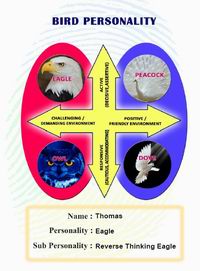
- Bird Personality : Dove
- Bird Personality : Mild Dove
- Bird Personality : Smart Dove
- Bird Personality : Brave Dove
- Bird Personality : Genius Dove
- Bird Personality : Wizard Dove
- Bird Personality : Reverse Thinking Dove
- Bird Personality : Changeable Dove
- Dove Personality in Relationships: How They Show Love