How to Parent Based on Your Child's Personality Type

Parenting based on your child's personality type means adjusting how you set limits, give attention, and respond to emotion, not changing the values you are trying to teach. A strong-willed child and a sensitive child can be raised toward the same values of honesty and kindness through very different daily approaches.
Why does one parenting style fail with some kids and work with others?
Most parenting advice assumes a fairly average, flexible temperament, and plenty of children simply are not that. A method that calms one child down can escalate another, not because the method is wrong, but because it is mismatched to how that particular child is wired. Parents often blame themselves, or blame the child, when really the tool just does not fit the kid in front of them.
How do you figure out your child's personality type in the first place?
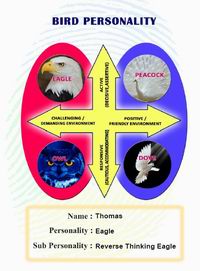
Watch for patterns rather than single incidents. Does your child recharge by being around people or by being alone after a big day? Do they process upset feelings out loud immediately, or do they need quiet time before they can talk about what happened? Do they take the lead naturally in group settings, or do they hang back and observe before joining in? Using a simplified Bird/DOPE-style lens, a child who leads and pushes for control often maps closer to an Eagle pattern, a highly social and expressive child closer to Peacock, a quiet observer who thinks before acting closer to Owl, and a cooperative, harmony-seeking child closer to Dove. Most kids will show a blend, and that blend can shift somewhat as they grow.
How should you parent a strong-willed, Eagle-leaning child?
These kids respond to structure delivered as a choice rather than a command. “It's bedtime now” invites a fight. “Do you want to brush your teeth first or pick your pajamas first” gives the same outcome with room for the child to feel some control. Punishing defiance harder usually backfires here, since this temperament tends to escalate against pressure rather than yield to it.
What does a highly social, Peacock-leaning child need from a parent?
Attention and connection matter enormously to this type, and withdrawing attention as a punishment can feel disproportionately painful to them compared to other consequences. These kids often do better with warm, engaged discipline, staying close and talking it through, rather than being sent alone to a room to think about what they did, which can register as rejection rather than correction.
How do you support a quiet, Owl-leaning child without pushing too hard?
Owl-leaning kids often need more processing time than parents expect before answering a question or making a decision, and rushing them tends to produce a shutdown rather than a faster answer. Giving a few extra seconds of silence after asking something, instead of filling it immediately, usually gets a more honest response. These children also tend to need less social interaction to feel fulfilled than parents sometimes assume, and pushing constant group activity on them can create more stress than benefit.
What helps a cooperative, Dove-leaning child who avoids conflict?
These children often say “I'm fine” when they are not, simply to keep the peace. Parents sometimes mistake this for genuine contentment and miss building resentment underneath. It helps to check in directly and specifically, asking what actually bothered them about a situation rather than accepting the first reassurance at face value, and to make it clear that disagreeing with a parent is allowed and safe.
How do you know if a behavior is really temperament, or something to address more directly?
This is the honest caveat worth sitting with. Temperament explains style, not every behavior. A child who is naturally intense is different from a child who is genuinely struggling with anxiety, aggression that hurts others, or a developmental concern that needs professional support. If a pattern is causing real distress to the child or the people around them, that is worth raising with a pediatrician or child psychologist rather than filing it under “that's just their personality.”
I also think it is worth admitting that no framework, including this one, captures a full child. Kids are not static, and a temperament that looks one way at five can shift meaningfully by ten. Use these patterns as a starting point for how you respond today, not as a permanent label you apply for the next fifteen years.
Think about the last time you and your child hit the same wall repeatedly, over homework, bedtime, or getting out the door in the morning. Was the approach you used built for a child who thinks and feels the way yours actually does, or was it built for an easier, more average temperament that is not the one you are raising?
Frequently Asked Questions
Can a child's personality type change as they grow older?
Yes, temperament can shift somewhat with age, environment, and life experience, though core tendencies often remain recognizable. Treat personality type as a flexible lens, not a fixed label.
What if my child does not clearly fit one personality type?
That is common. Most children show a blend of traits, and the blend can shift depending on context, such as school versus home. Focus on the specific traits showing up rather than forcing a single label.
Is it wrong to parent siblings differently based on their personality?
Not at all, as long as the underlying values and fairness stay consistent. Different approaches to reach the same values is different from favoritism, and most children understand that distinction better than parents expect.
How do I know if my child's behavior needs professional support rather than a parenting adjustment?
If a behavior is causing significant distress to your child, disrupting school or friendships, or involves aggression or self-harm, consult a pediatrician or child psychologist rather than assuming it will resolve with a different parenting style alone.
Does personality-based parenting mean giving in to a child's demands?
No. It means adjusting how limits are communicated and enforced, not removing the limits themselves. The boundary stays the same, the delivery adapts to what the child actually responds to.
This article is intended for general parenting reflection and is not a substitute for guidance from a pediatrician, child psychologist, or licensed family therapist. To better understand your own parenting tendencies alongside your child's, the Attachment Style Quiz and Bird Personality Test are useful starting points.
- 7 Journaling Ideas to Help You Better Understand Yourself
- Not Sure What to be Grateful For? Here are Some Ideas
- Medical Treatments for Breaking Bad Habits
- Early Bird or Night Owl? What That Says About Your Personality
- Parenting an Eagle Personality Child: Tips That Actually Work
- Prioritizing Self-Care: Why Taking Care of Yourself is Essential for Supporting Others
- What Happens to Your Body When You Read Every Day?
- Bird Personality : Dove
- Bird Personality : Mild Dove
- Bird Personality : Smart Dove
- Bird Personality : Brave Dove
- Bird Personality : Genius Dove
- Bird Personality : Wizard Dove
- Bird Personality : Reverse Thinking Dove
- Bird Personality : Changeable Dove
- Dove Personality in Relationships: How They Show Love