How to Handle Workplace Conflict Based on Your Personality Type
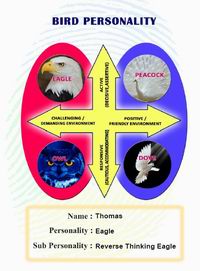
The best way to handle workplace conflict is to match your response to your natural conflict habit and then correct for its weak spot. Eagles tend to push too hard, Doves tend to give in, Owls tend to withdraw into analysis, and Peacocks tend to talk it out before they have listened. Each habit has a specific fix, and most of them take less than five minutes to apply.
Conflict at work costs time. A 2008 report from CPP Inc., the publisher of the Thomas-Kilmann Conflict Mode Instrument, found that US employees spent an average of 2.8 hours a week dealing with conflict, which the report valued at about $359 billion in paid hours. Even if you discount that figure, the pattern is familiar to anyone who has sat through a meeting where two colleagues argued about something other than the thing they were arguing about.
What are the five ways people handle conflict?
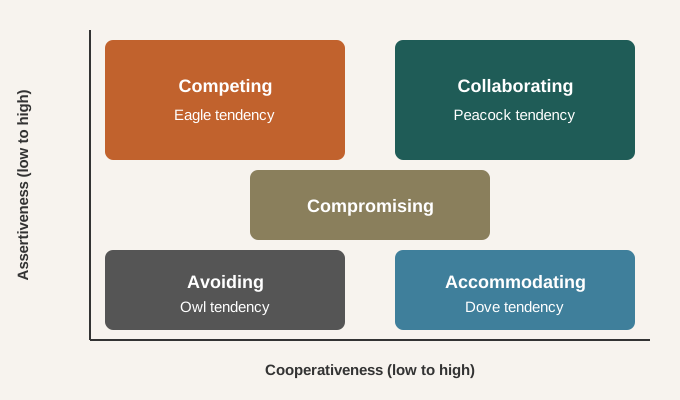
Kenneth Thomas and Ralph Kilmann described five conflict modes in 1974, placed along two axes: how assertive you are in pursuing your own goals, and how cooperative you are toward the other person's. The modes are competing, collaborating, compromising, avoiding, and accommodating. Most people use all five, with one or two as a default.
The DOPE bird types do not map perfectly onto the five modes, since they come from a different framework. Even so, the tendencies line up closely enough to be useful, and the pairing helps explain why the same disagreement goes smoothly with one colleague and badly with another.
| Bird type | Default conflict habit | What it looks like | Correction that helps |
|---|---|---|---|
| Eagle | Competing | Interrupts, states a position as final, wants a decision in the meeting | Ask for the other person's view first and wait for the full answer |
| Dove | Accommodating or avoiding | Agrees in the room, complains afterward, takes on extra work to keep peace | Say one disagreement out loud per meeting, even a small one |
| Owl | Avoiding or analyzing | Goes quiet, sends a long email with evidence, asks for more data | Set a deadline for the analysis and share a conclusion at it |
| Peacock | Collaborating, sometimes over-talking | Brings the group into it, uses humor, moves on from the issue quickly | Follow up in writing so the agreement is recorded |
How should an Eagle handle workplace conflict?
An Eagle should slow the first thirty seconds. Eagles tend to open with a solution, which skips the part where the other person feels heard, so the solution gets rejected for reasons unrelated to its merits. Starting with "Tell me how you see it" and then repeating one point back costs under a minute and changes the temperature of the conversation.
The second correction is about audience. An Eagle who corrects a colleague in front of the team, even politely, will be remembered for the correction and not for being right. Disagree one-on-one, then present the outcome to the group.
If you manage people, notice that your direct reports soften what they tell you because your reaction is fast and strong. Eagles in management often hear that "everything is fine" until a resignation letter arrives. A weekly question such as "What am I missing?" gives people a safer way to disagree.
How should a Dove handle workplace conflict?
A Dove should name the issue earlier and in smaller form. Waiting until the resentment is large makes the eventual conversation feel dramatic, and Doves hate drama, so they wait longer. Raising a minor irritation at week two, in one calm sentence, keeps it minor.
A script helps: "I want to flag something. When the deadline moved on Tuesday without notice, it made my schedule hard. Can we agree on a heads-up rule?" This states the fact, the effect, and a request, and it does not accuse anyone.
Doves also tend to say yes to extra tasks to avoid friction, which is a form of conflict avoidance that shows up as overload. Practice one alternative to yes: "I can do that by Friday if I drop the report. Which do you want first?" That is a negotiation, and it keeps your relationship with the requester intact.
How should an Owl handle workplace conflict?
An Owl should say the conclusion aloud before sending the analysis. Many Owls respond to a disagreement by writing a detailed document that proves their point. The other person receives a wall of text, feels attacked, and answers defensively, so the facts never get examined.
Try this order: one-sentence position, one reason, then an offer to share the data. "I think we should delay the launch two weeks because the checkout error rate is 3 percent. I can walk you through the logs if that helps." The numbers are still there, but the conversation starts with a person-to-person statement.
Owls also benefit from a time limit on avoidance. If you notice yourself rewriting an email for the fourth time, send a shorter version or ask for a ten-minute call. Silence from an Owl is often read as disapproval, even when it is only thinking time.
How should a Peacock handle workplace conflict?
A Peacock should listen for the full length of the other person's answer before responding. Peacocks are good at diffusing tension with warmth and humor, but a joke at the wrong moment tells a colleague that their concern is not being taken seriously.
The second correction is documentation. A Peacock leaves a hallway conversation sure that everything is settled, while the other person remembers it differently two weeks later. Send a two-line message afterward: "Good talk. We agreed I'll send the draft Thursday and you'll review by Monday." It feels unglamorous and it removes a common source of repeat conflict.
Seven steps for handling any workplace conflict
Regardless of type, the sequence below works in most workplace disagreements between peers. It borrows from Thomas and Kilmann and from the negotiation research of Roger Fisher and William Ury, whose 1981 book Getting to Yes popularized separating people from problems.
- Wait until you can describe the issue without insults. If you cannot say it neutrally in your head, you are not ready. Take a walk or sleep on it.
- Ask for a private ten-minute conversation. Say what it is about: "I'd like to talk about the handoff process."
- State the facts you observed. "The report arrived at 4:45 on Friday" is a fact. "You're always late" is a judgment.
- Describe the effect on your work. "I couldn't review it before the client call." This gives the other person something concrete to respond to.
- Ask for their view and repeat it back. Check that you understood. Corrections here save much more time later.
- Propose one specific change and ask for theirs. Agree on who does what by when.
- Follow up within a week. A short check-in turns a one-time talk into a working agreement.
What if the conflict is with your boss?
The same principles apply with a few adjustments: choose a private setting, frame the issue as a work problem and not a character problem, and bring a proposed solution. Managers react better to "The deadline is tight, and I can hit it if we cut the second report" than to "This is unreasonable."
If your boss is an Eagle, be brief and lead with the recommendation. If your boss is an Owl, send the data in advance. If your boss is a Dove, ask directly for their opinion, because they may be softening their real view. If your boss is a Peacock, schedule the conversation and follow up in writing.
Sometimes the conflict is not a style mismatch. If a manager belittles you, retaliates for raising concerns, or ignores a safety issue, personality advice is the wrong tool, and you should look at HR, a union representative, or an employment lawyer. Documenting dates and specifics matters in those cases.
When is avoiding the better choice?
Avoiding is sensible when the issue is trivial, when emotions are running too high for a useful talk, or when someone else is better placed to solve it. Thomas and Kilmann were clear that none of the five modes is correct in itself. The trouble comes from using one mode for every situation.
A quick test: will this matter in six months? If not, let it go. If it will, schedule the conversation instead of hoping the problem dissolves. Most do not.
If you want to see your own pattern before the next argument, the conflict behaviour test on this site scores your default style, and the result gives you a concrete place to start practicing.
Frequently asked questions
What is the best conflict style at work?
No single style wins. Collaborating works best for important issues where both sides can gain, compromising suits moderate issues with a deadline, and avoiding makes sense for trivial ones. Pick the mode after you size up the situation instead of defaulting to your habit.
How do you resolve a conflict with a coworker who ignores you?
Send a short, specific request in writing, then follow up in person if there is no reply within two working days. State the task, the date, and what you need. If silence continues, tell your manager about the work impact and not about the coworker's attitude.
Does personality type cause workplace conflict?
Style differences cause friction, but they do not cause conflict alone. An Eagle and an Owl disagree about speed because one wants a decision now and the other wants more data. Naming that difference lets both of them stop reading it as a personal slight.
How do you handle conflict if you are a people pleaser?
Start with low-risk disagreements, such as meeting times or document formats, and say your preference in one sentence. Use a script: fact, effect, request. Over a few months the larger conversations become easier because you have practice.
Should you report workplace conflict to HR?
Report it when the behavior involves harassment, discrimination, threats, retaliation, or a safety risk, or when direct conversation has failed and the problem affects your work. For ordinary disagreements, a direct conversation first is usually faster and keeps the relationship intact. Keep dated notes either way.
How long should a workplace conflict conversation take?
Ten to twenty minutes is enough for most peer disagreements. Longer talks tend to drift into old grievances. If the issue needs more time, agree on a second meeting and write down what was decided in the first.
- Bird Personality : Reverse Thinking Dove
- How To Make a Difference in the World
- How Different Personality Types Handle Conflict in Relationships
- What Kind of Bird Matches Your Daily Habits?
- The Most Inspiring Education Quotes of All Time
- Why Might You Doubt Yourself?
- The History of Education: From Ancient Greece to Modern Times