Are You the Toxic One? Self-Reflection Questions to Ask Yourself

You might be the toxic one in a relationship if you notice a consistent pattern of blaming your partner for your reactions, dismissing their feelings, or needing to win every disagreement rather than resolve it. The honest way to check is not how you feel about yourself, it is how your partner feels after being around you.
Why is this question so much harder to answer honestly than it sounds?
Almost nobody sees themselves as the toxic one in real time. Toxic behavior usually feels justified from the inside, a reasonable response to being hurt, ignored, or provoked. That is exactly why self-assessment here requires more than a gut check. It requires looking at patterns of impact rather than intentions, since intentions are the part your brain will defend automatically, and impact is the part your partner actually experiences.
Do you take responsibility, or do you explain your way out of it?
When your partner brings up something that hurt them, notice your first instinct. Is it curiosity about their experience, or is it a fast explanation for why they should not feel that way? “I only did that because you...” is a pattern worth sitting with if it shows up almost every time. Genuine accountability sounds different. It sounds like acknowledging the impact first, before getting to the context.
Do you need to win every disagreement, even small ones?
Some people treat every disagreement, even trivial ones, as something that must end in them being right. If conflict in your relationship rarely ends until your partner concedes, or apologizes even when they were not clearly wrong, that pattern deserves honest attention. Winning consistently is not the same thing as being right consistently, and a relationship where one person always wins is usually one where the other person has quietly stopped fighting back.
Do you use jealousy, checking, or guilt as tools to feel secure?
Wanting reassurance occasionally is normal. Regularly checking your partner's phone, tracking their location, or making them feel guilty for spending time with friends is a different category of behavior, even when it comes from real insecurity rather than malice. Insecurity explains where the behavior comes from. It does not make the behavior less harmful to the person on the receiving end of it.
How do your partner's friends and family describe them lately, compared to before you were together?
This one is uncomfortable but useful. If people who know your partner well have noticed them becoming quieter, more anxious, or less like themselves since being with you, that observation is worth taking seriously rather than dismissing as them being biased or overprotective. Outside perspective sees patterns that are harder to notice from inside a relationship, on both sides.
I think this is the part people resist most, and I understand why. Nobody wants to hear that their behavior might be the actual problem, especially if they also feel genuinely hurt by things their partner has done. Both things can be true. You can have legitimate grievances and still be contributing real harm through how you express them.
What should you do if you recognize yourself in these questions?
Start by naming it honestly to yourself before trying to explain it to your partner. That distinction matters, because the instinct to immediately justify the behavior to someone else often short-circuits the harder, more useful work of actually sitting with it first. From there, a therapist, especially one experienced in relationship patterns or anger, can help identify where the behavior is coming from and how to actually change it, not just apologize for it again.
Recognizing this in yourself is not the same as being a bad person permanently. It is closer to catching a pattern early enough to actually do something about it, which is a genuinely different position to be in than someone who never asks the question at all.
Frequently Asked Questions
Can someone be toxic without realizing it?
Yes, this is actually the most common version. Toxic behavior often feels reasonable or justified from the inside, which is why outside feedback and honest self-reflection matter more than gut instinct alone.
Does being toxic mean I am a narcissist?
Not necessarily. Toxic behavior can come from insecurity, past trauma, poor conflict skills, or learned patterns from childhood, not only from narcissistic traits. A licensed therapist can help clarify what is actually driving the behavior in your specific case.
How do I bring this up with my partner if I think I have been the problem?
Lead with specific behaviors you have noticed in yourself rather than a vague apology. Something like naming one concrete pattern and asking how it has affected them tends to open a more honest conversation than a general “I'm sorry if I've been difficult.”
Can toxic behavior actually change with effort?
Often, yes, especially with consistent effort and sometimes professional support such as therapy. Change tends to be more durable when it targets specific behaviors rather than a general promise to “be better.”
What if I ask myself these questions and I am still not sure?
That uncertainty itself is useful information. A neutral third party, such as a couples or individual therapist, can offer a more objective read on relationship patterns than either partner is likely to manage alone.
This article is intended for general self-reflection and is not a clinical diagnostic tool. If these questions raise real concerns, a licensed therapist can offer guidance suited to your specific situation. The Conflict Behaviour Test and Attachment Style Quiz can also help you understand your own patterns in more depth.
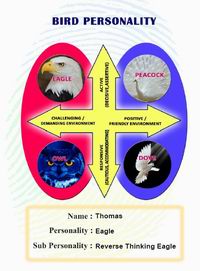
- Bird Personality : Dove
- Bird Personality : Mild Dove
- Bird Personality : Smart Dove
- Bird Personality : Brave Dove
- Bird Personality : Genius Dove
- Bird Personality : Wizard Dove
- Bird Personality : Reverse Thinking Dove
- Bird Personality : Changeable Dove
- Dove Personality in Relationships: How They Show Love