Toxic Relationship Signs in Friendships, Not Just Romance
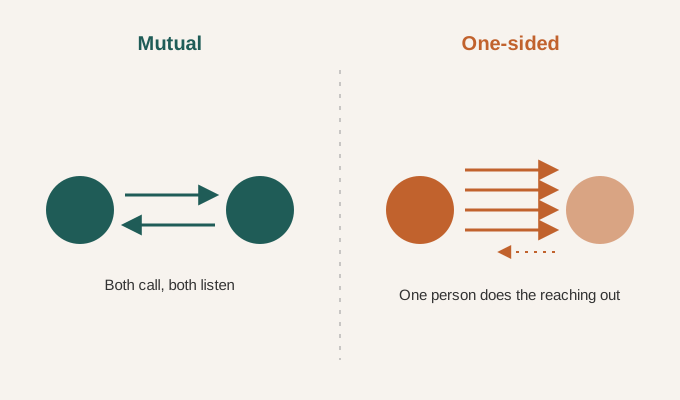
A toxic friendship is a friendship where you regularly leave feeling smaller, anxious, or drained, and where the other person ignores your attempts to fix it. The signs show up in patterns over months, not in a single bad argument, and they look different from the red flags in a romantic relationship because nobody expects a friend to behave this way.
I lost a friend of eleven years without ever having a fight with her. What I had instead was a long list of small things I had stopped mentioning: the cancelled plans that were always my fault, the jokes at my expense that I laughed at, the way my good news got a shrug and her bad news took over the evening. It took a third person asking "do you even like her?" before I admitted the answer was complicated.
What makes a friendship toxic instead of just difficult?
A difficult friendship has rough patches that both people work on. A toxic one has a repeating pattern in which one person's needs, moods, or opinions decide how the friendship goes, and raising the issue gets you punished, mocked, or ignored.
All friendships go through bad weeks. A friend who forgets your birthday during a divorce is not toxic. A friend who forgets it every year, then tells you that you are "too sensitive" for being hurt, is showing you how the friendship works.
In 2007, Julianne Holt-Lunstad and colleagues published a study in the Annals of Behavioral Medicine on what they called ambivalent ties, meaning relationships that are both supportive and upsetting. People spending time with ambivalent friends had higher blood pressure during the day than people with purely supportive friends. The researchers' point was that a friend who sometimes helps and sometimes hurts can be harder on the body than a friend you dislike, because you never know which version is coming.
What are the signs of a toxic friendship?
The most reliable signs are one-sided effort, constant criticism disguised as humor, jealousy about your successes, gossip about you, and pressure that makes you feel guilty for having other friends. Any one of them can happen once in a healthy friendship. Three or four together, repeated over months, is a pattern.
- You do all the reaching out. If you stop texting first for a month and the friendship goes silent, you were carrying it alone. Try this on purpose once and see what happens.
- Your good news gets a cold reception. A friend who changes the subject when you get a promotion or goes quiet when you announce an engagement is competing with you. Friends are supposed to be glad when things go well for you.
- Jokes land on your insecurities. They know exactly where it hurts, say it in front of other people, and call it teasing. When you object, the response is "I was joking," which makes your reaction the problem.
- Conversations only run one direction. You know every detail of their breakup and they could not tell you what you do for a living. The ratio matters more than any single talk.
- They keep score. Favors get remembered and brought up later as leverage. A friend who says "after everything I've done for you" is describing a debt, not a friendship.
- You feel relief when they cancel. Your body usually knows before your head does. If cancelled plans feel like a free evening, take that seriously.
- They talk about you behind your back, or to you about others. Someone who tells you every secret about a mutual friend is telling that friend your secrets too.
- They get upset about your other friendships. Comments like "you never have time for me anymore" aimed at a new job or partner are a form of control, particularly if they follow every time you make plans with someone else.
- Apologies come with conditions. "I'm sorry you feel that way" and "I'm sorry, but you also..." are ways of avoiding responsibility.
- You rehearse what you say before you say it. If you edit your own opinions to avoid a reaction, the friendship has a cost you pay in advance.
Is it a toxic friendship or a bad stretch?
Look at duration and response. A bad stretch has a cause (a death, a new baby, a job loss), lasts weeks to a few months, and ends when the cause does. A toxic friendship has no end date and gets worse when you name the problem.
| Situation | Bad stretch | Toxic pattern |
|---|---|---|
| Missed messages | Friend is overwhelmed, apologizes, and catches up | Friend ignores you, then reappears when they need something |
| You raise a problem | They listen, even if it stings | They deflect, laugh it off, or turn it into your fault |
| Your success | Some envy that they admit to, then support | Sarcasm, silence, or a rival achievement in the next breath |
| Duration | Weeks to a few months with a clear cause | Years, with no cause beyond how they treat you |
| How you feel afterward | Mostly fine, sometimes tired | Anxious, guilty, or relieved when it ends |
How do personality types show up in a toxic friendship?
Each of the four bird types has a typical way of damaging a friendship, and each has a typical way of being damaged by one. None of this is destiny, but it gives you something specific to look for.
Eagles tend to dominate. An eagle friend decides where you eat, what movie you watch, and which of your decisions was wrong, and often reads pushback as disloyalty. Peacocks can drift into one-sided attention-seeking, where your problems always remind them of a story about themselves. Doves rarely cause open conflict, but they can build resentment silently and then vanish. Owls can go cold and critical, correcting small details and withdrawing when emotions run high.
The reverse matters too. In my experience, doves stay in bad friendships for years because leaving feels like confrontation, while eagles tend to leave abruptly and without warning. That is an observation from watching people, not a research finding. If you want to know where you sit, the bird personality test takes a few minutes, and the result may explain why you put up with some behavior longer than others.
Why do people stay in toxic friendships?
People stay because friendships have fewer exit rules than romantic relationships, and because the time invested is large. Jeffrey Hall of the University of Kansas estimated in a 2018 study that it takes about 50 hours together to move from acquaintance to casual friend, about 90 hours to become a friend, and more than 200 hours to become a close friend. Walking away from someone you have spent 200 hours with feels like throwing away real money.
Shared social circles raise the price. If your friend group overlaps, leaving one person can mean losing the group, or being asked to explain yourself at every party. Shared history is the other trap. A friend who knew you at nineteen holds a version of you that nobody else has, and that is hard to give up even when they use it against you.
I also think we hold friendships to a lower standard of honesty because nobody gives us a script. There is no "defining the relationship" talk for friends, so problems drift without a name until they become the whole relationship.
What should you do about a toxic friend?
Start with one direct conversation about one specific behavior, and watch how they respond. If they listen and change, you have a friendship worth keeping. If they deny, attack, or punish you for raising it, you have your answer.
- Name one behavior, not their character. "You made a joke about my weight at dinner and it hurt" is something a person can respond to. "You're a mean person" will start a fight you cannot win.
- Give it a short window. Two or three weeks is enough to see whether anything changes. A promise followed by the same behavior is information.
- Reduce contact before ending contact. Answer later, see them in groups, and stop sharing personal news. Many toxic friendships fade here without a confrontation.
- End it in plain words if you need to. One message is enough: "I don't think this friendship is working for me, and I'm going to step back. I wish you well." You do not owe a defense of the decision.
- Expect pushback and decide in advance how you will handle it. You may get guilt, anger, or a flood of apologies. A sudden warm streak after you pull away is common and does not mean the pattern has changed.
Some people have to stay in contact, such as a coworker or a friend inside a shared household. In that case, set limits on topics and time rather than trying to repair the friendship. Keep conversations short, avoid personal details, and stop explaining yourself.
Can a toxic friendship be repaired?
Sometimes. It works when both people agree there is a problem and the harmful behavior is specific enough to change. A friend who has a habit of interrupting, for instance, can learn to stop. A friend whose behavior is about control or contempt rarely changes without therapy, and even then the friendship may not return to what it was.
I keep thinking about the friend I lost, and I do not know whether it could have been repaired. She never saw a problem, so there was nothing to repair. That was the information I needed, and it took me far longer than it should have to accept it.
Frequently asked questions
How do you know if a friend is toxic?
Watch how you feel after spending time with them. If you regularly leave feeling anxious, criticized, or relieved the visit is over, and the pattern continues after you tell them what bothers you, the friendship is likely toxic. One bad evening does not count; a pattern over months does.
Should you tell a toxic friend why you are ending the friendship?
You can, but you do not have to. A short, calm message is enough if you want closure. If the person has a history of arguing, twisting your words, or punishing you for honesty, a brief note or a gradual fade protects you better than a long explanation.
Can toxic friendships affect your health?
Evidence points that way. A 2007 study by Holt-Lunstad and colleagues found that people with ambivalent friends, meaning friends who are both supportive and upsetting, had higher ambulatory blood pressure than people with supportive friends. Chronic stress from a draining relationship also tends to disturb sleep and mood.
Is it normal to feel guilty after ending a toxic friendship?
Yes, and the guilt usually fades within a few months. It comes from the years of loyalty you put in and from the other person's reaction, not from having done something wrong. Grief is also normal, since you are losing someone who was part of your daily life even if the relationship was bad for you.
What is the difference between a toxic friend and a high-maintenance friend?
A high-maintenance friend needs a lot of attention but is kind, thanks you, and respects your limits when you state them. A toxic friend ignores or punishes those limits. The test is whether the friend accepts a "no" without making you pay for it.
How long should you try to fix a toxic friendship?
Two or three months of honest effort is a fair window. If you have named a specific problem, given the friend time to respond, and seen no change, more effort from you will not produce it. Friendships need two people working on them.
- Bird Personality : Dove
- Are You an Eagle Personality? 12 Signs You Lead Like One
- Anger Management
- How to Be More Altruistic: A Comprehensive Guide to Helping Others
- 19 Easy Ways to Be a Good Parent
- 16 Personalities of Myers-Briggs Type Indicator (MBTI)
- How Different Personality Types Handle Conflict in Relationships
- Bird Personality : Dove
- Bird Personality : Mild Dove
- Bird Personality : Smart Dove
- Bird Personality : Brave Dove
- Bird Personality : Genius Dove
- Bird Personality : Wizard Dove
- Bird Personality : Reverse Thinking Dove
- Bird Personality : Changeable Dove
- Dove Personality in Relationships: How They Show Love