How Parenting Style Shapes a Child's Personality

Parenting style influences a child's personality by shaping emotional safety, independence, communication, and responses to limits. Temperament, culture, peers, health, and chance also matter. Warmth with consistent boundaries generally gives children both security and room to develop an individual identity.
Temperament and parenting are different
Temperament includes early tendencies such as sensitivity, activity, adaptability, and intensity. Parenting responds to those tendencies and can either support regulation or add unnecessary shame. A slow-to-warm child may need preparation; an energetic child may need movement. Adjusting the approach does not mean abandoning expectations. It means choosing a route the child can realistically follow.
Authoritative parenting and secure limits
Authoritative parenting combines warmth with structure. The adult explains limits, listens to feelings, and still makes age-appropriate decisions about safety. It differs from permissiveness because rules are followed through, and from authoritarianism because obedience is not the only goal. Children learn that connection can survive disappointment and that freedom comes with responsibility.
How harsh control affects self-concept
Frequent threats, humiliation, comparison, or unpredictable punishment can teach children that mistakes endanger belonging. Some become highly compliant and anxious; others become defiant or secretive. A firm boundary can be delivered without attacking character. Correct the behavior, state the reason, and offer a path to repair. Discipline should teach a skill, not discharge adult frustration.
Warmth without limits
Affection is essential, but children also need predictable routines and protection from responsibilities they cannot manage. When every frustration is removed, a child may have fewer chances to practice patience, problem solving, and accountability. Set a clear limit, acknowledge the feeling, and stay present while the child experiences a manageable disappointment.
Language that builds emotional literacy
Children learn emotion words through repeated conversations. Name what you observe without claiming certainty: ‘Your fists are tight; are you angry or worried?’ Validate the feeling without approving harmful behavior. ‘It makes sense that you wanted more play; I will not let you hit.’ This distinction supports empathy, self-control, and honest communication.
Supporting different personality types
An introverted child may need recovery after social activity, while an outgoing child may need practice waiting and listening. A highly sensitive child may react to noise or criticism; a determined child may need choices within a firm boundary. Avoid comparing siblings. Fairness means meeting different needs while preserving equal dignity and reasonable expectations.
Autonomy and age-appropriate choice
Children develop confidence when they can make real decisions within safe limits. Offer two acceptable choices about clothing, order of tasks, or a weekend activity. Do not make a child responsible for adult finances or relationship conflict. Autonomy grows from repeated experiences of trying, failing safely, receiving guidance, and trying again.
Praise, criticism, and motivation
Specific feedback is more useful than global praise. Say ‘You kept checking the instructions’ rather than ‘You are a genius.’ Focus on strategies, effort, honesty, kindness, and repair. Criticism should identify a behavior and next step, not attach a permanent identity. Children who believe ability can develop are more willing to seek help.
Repair after a parenting mistake
Parents will lose patience. Repair requires a direct apology without making the child comfort the adult: ‘I shouted, and that was not okay. The rule still matters; I will explain it calmly.’ Then change the plan. Repeated repair teaches accountability and gives children evidence that conflict does not automatically destroy connection.
Culture, stress, and realistic parenting
Parenting advice must account for housing, work schedules, disability, language, community, and safety. Stress narrows attention and makes flexible responses harder. A practical plan might involve simplifying routines, sharing care, asking a school for support, or speaking with a clinician. A parent does not need perfect calm; they need enough support to recover and try again.
Digital life and modern boundaries
Screens create questions about sleep, privacy, social pressure, and attention. Set family rules that match age and risk, explain the reason, and revisit them as the child develops. Teach media literacy rather than relying only on surveillance. Safety requires supervision, but growing children also need increasing privacy and opportunities to make responsible choices.
When behavior signals distress
A change in sleep, appetite, play, school participation, mood, or friendships may signal stress rather than bad character. Ask open questions and observe patterns across settings. Consult a pediatrician, school counselor, or mental-health professional when concerns persist or safety is involved. Do not diagnose a child from a personality list or online quiz.
Reflecting on your own model
Ask what your child sees when you handle anger, apologize, rest, disagree, and set limits. Children learn from what adults repeatedly do. Choose one family value and make it observable this week: respectful disagreement might mean no insults and a return to the conversation after a pause. Small consistency is more powerful than a perfect speech.
Frequently asked questions
Is this an exact test or diagnosis?
No. It is an educational framework for noticing patterns and considering practical choices. A qualified professional is needed for assessment or treatment.
Can people change these patterns?
Yes. Skills, environments, relationships, and support can change how a tendency is expressed. Progress is measured through repeated behavior, not a perfect day.
What should I do first?
Choose one recent example, write down the observable facts, and identify one small action that protects wellbeing or improves communication.
When should I seek professional support?
Seek help when distress persists, daily functioning declines, or safety is uncertain. Urgent danger requires local emergency or crisis services.
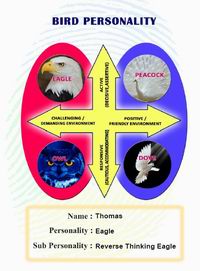
- Bird Personality : Dove
- Bird Personality : Mild Dove
- Bird Personality : Smart Dove
- Bird Personality : Brave Dove
- Bird Personality : Genius Dove
- Bird Personality : Wizard Dove
- Bird Personality : Reverse Thinking Dove
- Bird Personality : Changeable Dove
- Dove Personality in Relationships: How They Show Love