Parenting an Eagle Personality Child: Tips That Actually Work
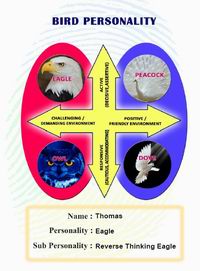
Parenting an Eagle personality child usually goes better when you offer structured choices instead of flat commands, since Eagle children, the decisive, competitive type in the DOPE framework, respond to a sense of control far more than to pressure or lengthy explanation. Treating pushback as a bid for autonomy, rather than defiance for its own sake, defuses most daily power struggles.
What an Eagle Personality Child Typically Looks Like
Eagle children tend to be fast-moving, competitive, and impatient with slow explanations, wanting the bottom line rather than the reasoning behind a rule. They often take charge of games with siblings or friends, push back on instructions that feel arbitrary, and get bored quickly with tasks that lack a clear goal or challenge.
Why Traditional Discipline Often Backfires
A flat “because I said so” rarely lands with an Eagle child, since it offers no room for input and reads as a challenge rather than a boundary. Punishments that strip away control entirely, without explaining the path back to earning it, tend to escalate the standoff instead of resolving it. Eagle kids are not testing you to be difficult. They are checking whether the rule is negotiable and how much say they actually have.
Give Structured Choice Instead of Open-Ended Freedom
Offering two acceptable options, rather than one command or unlimited freedom, usually works best: homework before or after a snack gives an Eagle child real control inside a boundary you still set. This differs from letting them decide whether homework happens at all. The structure stays fixed; the order or method becomes theirs to choose.
Channel Their Drive Instead of Trying to Dampen It
An Eagle child's competitiveness and impatience are not flaws to suppress. They are the same traits that, aimed at a real goal, produce a capable and motivated kid. Giving them a challenge with a visible finish line, a leadership role in a family task, or a small area of genuine responsibility usually channels that energy better than repeatedly telling them to slow down.
A Few Concrete Ways to Channel the Drive
Small leadership roles work well: letting an Eagle child plan the route for a family walk, run a simple household competition against a sibling, or own a chore end to end rather than being told each step. Timed challenges also land well, since Eagle kids are often motivated by beating a clock or a previous personal result more than by pleasing an adult. Team sports or structured games with clear rules and a visible scoreboard tend to suit them better than free play with no defined winner, because the goal itself is part of what holds their attention.
Handle Defiance Without Turning It Into a Power Struggle
When an Eagle child pushes back, naming the boundary once, calmly, and following through without repeating yourself five times usually works better than escalating volume to match theirs. Matching their intensity tends to confirm, in their mind, that the only way to be heard is to fight harder. A quick look at your own patterns with a conflict behaviour test can reveal whether you are the one escalating without realizing it.
What Eagle Kids Need Emotionally, Even If They Rarely Ask
Underneath the drive to win and lead, Eagle children often struggle to sit with failure or slow down enough to notice when they are overwhelmed. They benefit from a parent naming feelings out loud for them, such as noting that something felt unfair and they are frustrated, since they may not pause to identify the emotion themselves in the moment. This does not mean softening every boundary. It means adding an emotional layer to a parenting style that can otherwise stay purely behavioral.
Every Eagle child is still an individual kid, not a walking checklist, and a framework like DOPE describes tendencies rather than guarantees. Some of the tips here will fit your child closely and some will not, and that gap usually says more about the limits of any personality framework than about your parenting.
This article offers general parenting reflection and is not a substitute for guidance from a pediatrician or child psychologist if behavior concerns persist.
Frequently Asked Questions
What is an Eagle personality child in the DOPE framework?
An Eagle child is the decisive, fast-moving, competitive type within the DOPE personality framework, typically impatient with slow explanations and drawn to leadership and challenge.
How do I discipline an Eagle child without constant power struggles?
Offer structured choices instead of flat commands, state a boundary once calmly, and follow through consistently rather than repeating yourself or escalating your tone to match theirs.
Are Eagle personality children naturally more difficult to parent?
Not necessarily more difficult, just different in what motivates cooperation. Eagle children generally respond better to a sense of control and a clear goal than to pressure or lengthy explanation.
Can an Eagle child's competitiveness be a good thing?
Yes. Aimed at a real challenge or responsibility, that same drive often produces a motivated, capable kid, so channeling it usually works better than trying to suppress it.
Should I use a personality framework to decide how to parent my child?
Use it as a starting point for understanding tendencies, not a fixed rulebook. Every child is an individual, and adjusting based on what actually works for your specific kid matters more than following any framework exactly.
- Big Five Personality Traits. What is it and Why it matters?
- What You Need to Do If You Hate Your Job
- Bird Personality : Changeable Owl
- Peacock Personality in Relationships: What Makes Them Fall in Love
- Rich Mindset Vs Poor Mindset
- Career Development Strategies
- The Law of Attraction: What It Is and How to Practise It Daily