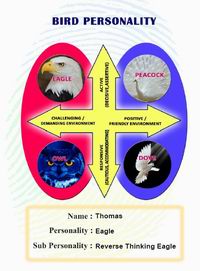
Personality shapes conflict mainly through pace and priority: some people want the disagreement resolved immediately, others need distance before they can talk, and some will avoid it altogether if avoiding feels safer than confronting it. None of these reactions is wrong on its own, but mismatched styles are where most relationship conflict actually gets stuck.

Personality traits shape stress coping mainly through two levers: how much a person needs control over the outcome, and how much they process emotion internally versus out loud. High-control personalities tend to cope by planning and fixing, while more reflective or anxious types often cope by ruminating or seeking reassurance first.
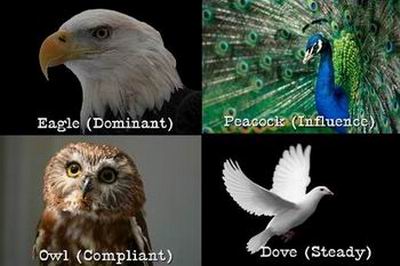
Your daily habits usually point to one of four bird-based personality patterns: Eagle if you move fast and decide quickly, Owl if you plan everything before acting, Dove if your day revolves around routine and other people, or Peacock if your habits shift with whoever and whatever is around you.
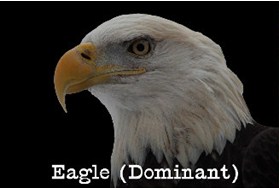
You're likely an Eagle personality if you naturally take charge in group situations, make decisions faster than most people around you, and get more energized by a challenge than intimidated by it. The clearest sign is that people tend to look to you first when a decision needs to get made under pressure.

Parenting a big, bold child works best when you stop trying to shrink the personality and start giving it structured room to move. Bold kids need firm limits, but the limits have to leave space for their intensity, or you'll spend years in a power struggle that nobody wins.
Yes, a free online personality test can absolutely help you understand your work style, as long as you treat the result as a starting point for reflection rather than a verdict on who you are. Tools like the 16Personalities (Myers-Briggs-style) test, the Big Five assessments, or the DISC-based free versions can highlight real patterns in how you communicate, make decisions, and handle stress at work. They just can't tell you the whole story, and they're not a substitute for actual feedback from coworkers or a manager.
You're not imagining it. The person you were at 22 — impulsive, staying out until 3am on a Tuesday, moving across the country on a whim and calling it a plan — that person is genuinely different from who you are now. And the changes are bigger than just "I grew up."
Confidence can feel like magic. You see someone walk into a room—shoulders relaxed, voice steady, eyes present—and you wonder, How do they do that? Were they born this way? Or did they learn something you didn’t? The truth is reassuring: while some people appear naturally confident, confidence is shaped by biology, environment, habits, and experience. And most importantly—it’s something you can build.
Most people use the words personality and character interchangeably in everyday conversation. Someone might say, "She has such a great personality," or "He's a man of strong character," and both sentences feel equally intuitive. Yet these two words point to fundamentally different aspects of who we are — and conflating them can lead to serious misjudgments about ourselves and the people around us.
Most people spend years chasing goals that don't actually fit who they are — not because they lack ambition, but because they've never paused long enough to understand themselves. Personality isn't just a label you slap on a vision board. It's the invisible architecture behind how you think, make decisions, handle pressure, and connect with other people.
|