Dermatoglyphics Multiple Intelligence Test (DMIT)
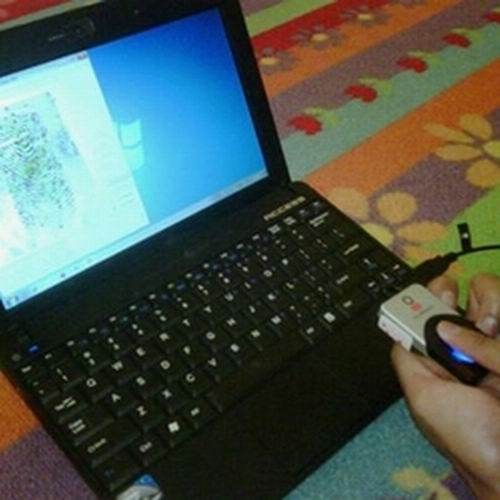
In the quest for self-discovery and optimal personal development, the Dermatoglyphics Multiple Intelligence Test (DMIT) has emerged as a groundbreaking tool. This non-invasive, scientific analysis of unique fingerprint patterns is believed to offer profound insights into an individual's innate talents, cognitive strengths, and personalized learning styles.
Rooted in the fields of genetics, embryology, and psychology, DMIT provides a biological blueprint for understanding the complexities of the human brain. Far more than a simple personality quiz, this test serves as a crucial roadmap for parents, students, professionals, and organizations seeking to unlock and maximize their inherent capabilities.
The Science Behind DMIT: Dermatoglyphics and the Brain
The foundation of DMIT rests on the convergence of two key scientific concepts: Dermatoglyphics and Dr. Howard Gardner's Theory of Multiple Intelligences.
What is Dermatoglyphics?
Dermatoglyphics is the scientific study of the skin's ridge patterns on fingers, palms, and soles. Critically, these patterns are formed during the early stages of fetal development, typically between the 13th and 21st prenatal weeks. This is the same period when the human brain's neocortex is developing. Medical research suggests a unique correlation:
-
Shared Origin: The epidermal ridges (which form fingerprints) and the central nervous system (including the brain) both originate from the same embryonic layer—the ectoderm.
-
Invariance: Once formed, fingerprint patterns remain unchanged throughout a person's life, offering a stable and objective metric for analysis.
-
Brain Lobe Mapping: DMIT analysis maps the patterns on each finger to the five key lobes of the brain (Frontal, Prefrontal, Parietal, Temporal, and Occipital), revealing the relative strengths and distribution of brain cell activity. For instance, the thumb is often linked to the Frontal and Prefrontal lobes, associated with thinking, planning, and executive function.
Integrating Multiple Intelligences (MI) Theory
The results from the dermatoglyphic analysis are then interpreted through the lens of Dr. Howard Gardner's Multiple Intelligences Theory. This theory proposes that intelligence is not a single, monolithic entity but rather a collection of distinct abilities. DMIT typically assesses the eight core intelligences:
-
Linguistic (Word Smart)
-
Logical-Mathematical (Number/Reasoning Smart)
-
Spatial (Picture Smart)
-
Bodily-Kinesthetic (Body Smart)
-
Musical (Music Smart)
-
Interpersonal (People Smart)
-
Intrapersonal (Self Smart)
-
Naturalistic (Nature Smart)
-
Exsistential (Divine Smart)
By correlating fingerprint patterns with these intelligence types, DMIT aims to identify a person’s inborn dominance and potential in these distinct areas.
Key Benefits and Applications of the DMIT Test
The comprehensive insights provided by a DMIT report offer powerful advantages across various stages of life.
For Parents and Children (Early Development)
-
Discovering Inborn Talent: Helps identify a child's natural strengths and potential at an early age (often recommended from 2 to 12 years old), allowing for focused development and nurturing.
-
Optimal Learning Style: Uncovers the child's most effective way of absorbing information—be it Visual (Spatial), Auditory (Aural-Musical), or Kinesthetic (Physical)—enabling parents and educators to tailor teaching methods for better academic performance.
-
Improved Communication: Understanding a child's innate personality and communication style can foster better parent-child relationships and reduce conflict.
For Students and Young Adults (Academic & Career Guidance)
-
Stream/Subject Selection: Provides clarity in choosing the right academic stream (e.g., Science, Arts, Commerce) and specific subjects that align with the student's natural aptitude and dominant intelligences.
-
Informed Career Path: Offers data-driven recommendations for college majors and career fields, eliminating the "trial and error" approach and leading to a more fulfilling professional life.
-
Self-Awareness & Confidence: Helps individuals understand their unique strengths, boosting self-confidence and motivation by focusing on areas where they naturally excel.
For Professionals and Corporations (Talent Management)
-
Professional Development: Adults can use the report to identify untapped potentials and core competencies, guiding them toward suitable upskilling or leadership training programs.
-
HR and Recruitment: Corporations can utilize DMIT for pre-employment screening, matching job candidates to roles that best suit their innate character traits, leadership styles, and work management preferences.
-
Team Building: Reports can highlight the collective strengths and weaknesses of a team, improving overall organizational performance by ensuring the "right person is in the right job."
Decoding the DMIT Report: What to Expect
A detailed DMIT report is a multi-page document that serves as a personalized guide to an individual's potential. Typical sections include:
| Report Section | Key Insight Provided |
| Brain Hemispheres Analysis | Comparative strengths and weaknesses of the Left Brain (logic, language, detail) and Right Brain (creativity, emotion, big picture). |
| Total Finger Ridge Count (TFRC) | An indicator of overall learning capacity and speed of comprehension. |
| Multiple Intelligence Talent | Ranking of the individual's dominant and latent intelligences (Linguistic, Logical, Spatial, etc.). |
| Personal Quotients | Assessment of various quotients, including IQ (Intelligence), EQ (Emotional), SQ (Social/Spiritual), and AQ (Adversity). |
| Learning Style & Type | Preferred method of learning (Visual, Auditory, Kinesthetic) and thinking style (e.g., conceptual vs. objective-driven). |
| Innate Character Traits | Inborn personality traits, behavioral patterns, and communication style. |
| Career & Major Recommendations | Specific suggestions for college majors, courses, and career paths that align with natural potential. |
The Dermatoglyphics Multiple Intelligence Test (DMIT) offers a unique and objective perspective on human potential, rooted in the fascinating correlation between fingerprint patterns and brain development. By providing a clear and comprehensive blueprint of one's innate strengths, learning preferences, and core intelligence profile, DMIT empowers individuals of all ages to make informed decisions that lead to greater self-awareness, academic success, and professional fulfillment.
Ready to unlock your full potential?
For more in-depth information on the DMIT process and comprehensive reports, please consult reputable service providers such as www.brainevo.com.
- Signs Your Parenting Style May Be Too Controlling
- Breaking the Cycle of Conformity: Understanding the Importance of Authenticity
- What is Hoarding Disorder?
- Bird Personality : Smart Peacock
- GABA: The Brain Chemical That Can Improve Your Health
- Exploring Real-world Applications of Kinesthetic Intelligence
- Unlocking the Power of Visual-Spatial Intelligence
- Bird Personality : Dove
- Bird Personality : Mild Dove
- Bird Personality : Smart Dove
- Bird Personality : Brave Dove
- Bird Personality : Genius Dove
- Bird Personality : Wizard Dove
- Bird Personality : Reverse Thinking Dove
- Bird Personality : Changeable Dove
- Dove Personality in Relationships: How They Show Love